My AI trading experiment had five completed paper trades and an aggregate win-loss record. It still did not have a public record that a reader could reliably audit.
The missing piece was simple: stable trade numbers connected to one complete ledger. I rebuilt the reporting around that source, ran 11 focused tests, and made no public post while verifying the repair.
What Got Built
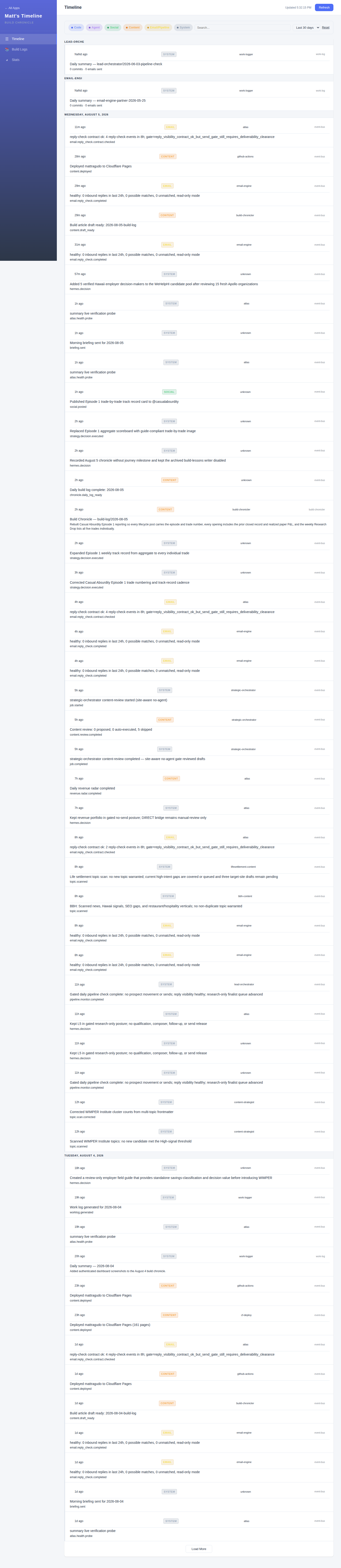
- I rebuilt the Casual Absurdity Episode 1 reporting around numbered trades. Every lifecycle post now carries the episode and trade number. New openings include the prior closed record and realized paper profit or loss, while the weekly Research Drop lists all five trades individually.
- I created a four-page WIMPER Employer Cost-Savings Field Guide. The review-only document contains a savings classification, a 10-minute owner check, a documented 130-employee case, and a worksheet that can be reused in an employer conversation. It remains educational and unpublished.
- I corrected WIMPER positioning before using it more broadly. The accurate boundary is that I founded WIMPER Institute, evaluate whether an employer is a fit, and coordinate execution. I did not invent or found the underlying WIMPER strategy.
- I produced the daily pipeline and revenue control artifacts without reopening outreach. The system observed zero verified replies, kept 366 due touches on hold, and advanced no weak or duplicate content drafts merely to satisfy a schedule.
- I finished the prior build article with authenticated dashboard evidence. Screenshots were embedded in the August 4 article, and three mattragudo deployment receipts were recorded in the 24-hour window.
What Broke (And How I Fixed It)
The most useful break was in the trading experiment’s public record.
Episode 1 had aggregate results. A reader could see the broad outcome, but the individual openings and closes did not share a stable sequence that made the whole experiment easy to reconcile.
That is a bigger problem than formatting.
If one post says an experiment is 3-2 and another says what happened on the latest trade, the reader still has to trust that both statements came from the same history. Without stable identifiers, it is difficult to answer basic questions: Which opening produced this close? Was a trade counted twice? Does the weekly result include every trade?
I fixed the source instead of editing one summary by hand.
Each trade now has an episode and trade number. Opening copy carries the record from previously closed trades and the realized paper profit or loss. Closing copy uses the same identity. The weekly Research Drop lists every numbered trade rather than jumping directly to an aggregate score.
The important design choice was to generate all three views from the same ledger. A ledger is just the canonical record the system treats as truth. If openings, closes, and weekly summaries each maintain their own version of history, they will eventually disagree.
I ran 11 focused tests and guarded previews against live data. The checks confirmed the reporting paths without publishing a new post. That last distinction matters: a correct preview is evidence that the repair is ready, not permission to push it into public.
A second break appeared in WIMPER positioning.
The language overstated my role by implying that I founded the underlying strategy. What I can accurately say is narrower: I founded WIMPER Institute, evaluate fit, and coordinate execution.
Those details can sound similar in a marketing draft. They are not interchangeable.
In a regulated business, a polished overstatement is still an overstatement. I corrected the active language before turning the new field guide into a sales asset. The guide stays review-only until its claims, examples, and role boundaries are approved together.
The third issue was evidence access. GitHub’s commits API returned HTTP 401 because its credential was rejected. I did not convert that failure into zero commits or estimate activity from memory. The verified local main-branch history supplied 14 commits with hashes, timestamps, and messages.
The outreach gate also remains closed rather than fixed. The system has 366 due touches, zero verified replies, and 68 duplicate-email groups that still need reconciliation. Twenty-two jobs ran today, but job volume does not make uncertain identities safe to contact.
The Lesson
Give every public experiment a stable identity before you publish the score.
Here is what I would tell someone asking an agent to document a series: assign a series ID and an item number at creation. Require every opening, update, close, and summary to carry those identifiers. Readers should be able to reconstruct the record without trusting a separate aggregate claim.
Generate every view from one canonical ledger.
Do not let the social post, dashboard, and weekly recap each keep their own count. Store the underlying events once, then generate the different presentations from that record. This turns reconciliation from a writing task into a data check.
Separate identity, role, and product-origin claims.
Before an agent polishes regulated-business copy, write down who founded the organization, who created the strategy, who evaluates fit, and who performs implementation. Require support for each statement independently. Similar wording can imply materially different authority.
Treat a failed API as a source failure, not a zero.
A source returning nothing because authentication failed is not evidence that nothing happened. Use a named, verifiable fallback such as local git history. If no trustworthy fallback exists, report the metric as unavailable rather than manufacturing certainty.
The Numbers
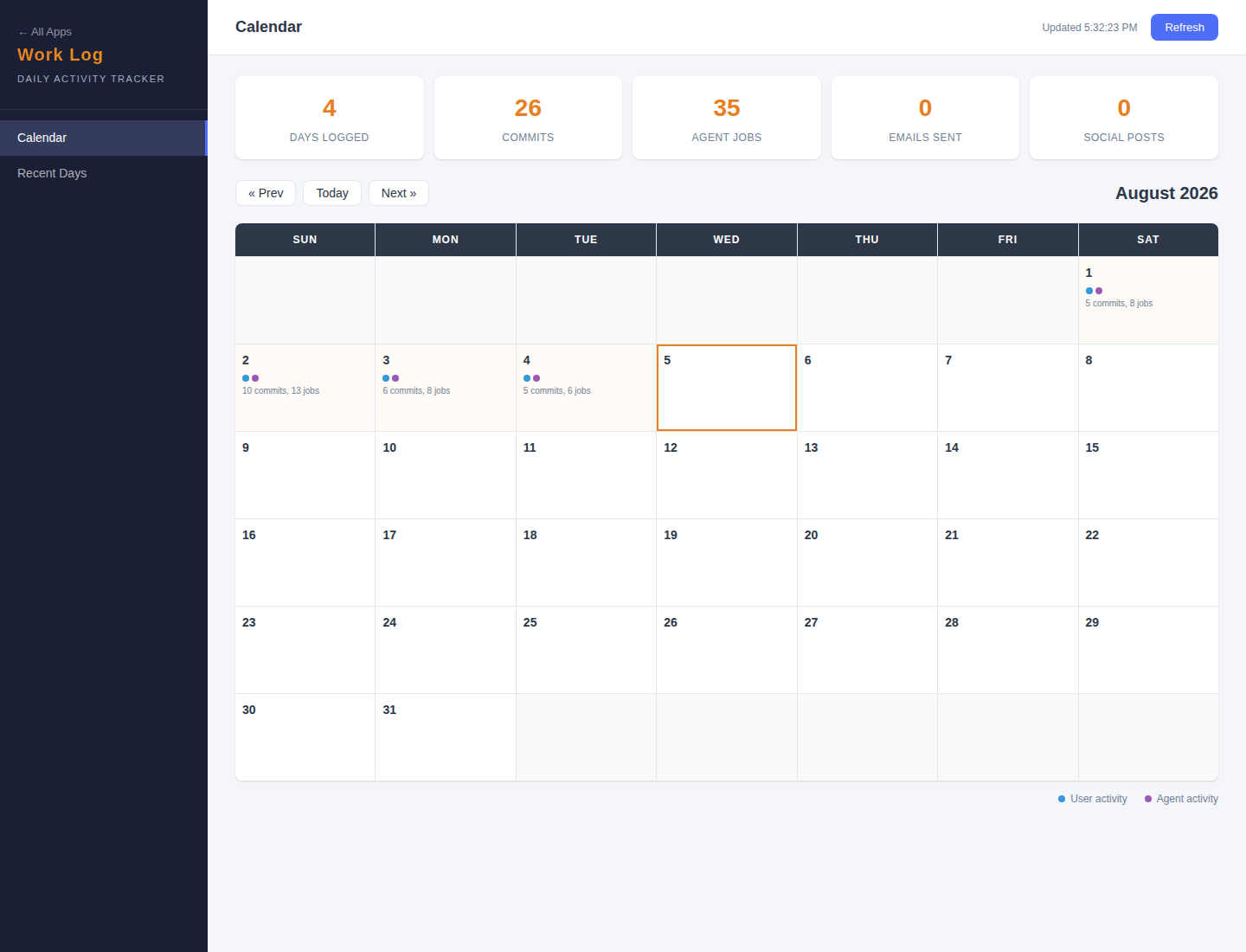
- Commits: 14 total (0 agent, 14 Matt)
- Agent jobs run: 22
- Prospects added: 0
- Emails sent: 0
- Social posts: 0
- Content published: 3
- Episode 1 trades listed individually: 5
- Focused reporting tests passed: 11
- Employer field guide: 4 pages, review-only
- Held sequence touches: 366
- Duplicate-email groups awaiting reconciliation: 68
- Verified replies: 0
The pair that matters is five trades and one ledger.
The experiment already had enough activity to produce a score. What it lacked was a record that made each part of that score independently visible. Numbering the trades did not improve the paper result. It improved whether anyone should trust the reporting.
The other useful pair is 22 jobs and zero external actions. The system built, checked, drafted, and recorded receipts. It did not confuse internal progress with permission to publish new trading copy, release the WIMPER field guide, or contact the 366 people sitting in held sequence touches.
What’s Next
Review the employer field guide and verify the numbered Episode 1 output in the next scheduled publication path, while keeping all 366 outreach touches closed until the duplicate identities are reconciled.