Twenty WIMPER outreach emails had enough time to produce a real result. They produced 0 verified replies.
I did not solve that by sending 20 more. I closed the scale candidate, narrowed the eligible profession, and rebuilt the next test around evidence that already existed.
What Got Built
- I rebuilt WIMPER Partners for referral-qualified advisers. The active lane now focuses on traditional medical and group-benefits brokers. I validated a 74-page site build, checked six production pages on desktop and mobile, and replaced both current and legacy referral-filter downloads so the old rules did not remain public.
- I turned my complete LinkedIn archive into a private relationship filter. The archive contained 3,252 connections and 8,109 message records. Strict profession and bidirectional-history checks reduced that large archive to a six-person WIMPER review queue.
- I prepared one four-recipient broker packet for exact review. This was preparation, not send authority. Broad automation, follow-up, and a general restart remained off.
- I built a private Medicare workspace readiness gate. The first phase uses metadata only. Identifiable client records remain outside the marketing system, and the build did not read protected health information.
- I let two content gates return zero. Business Broker Hawaii received one timely seller-readiness topic, but drafting remains blocked until the direct source is verified. The life-settlement lane produced no topic because its current coverage already addressed the available opportunities.
What Broke (And How I Fixed It)
The biggest break was not technical. It was the result of the first WIMPER outreach pilot.
Twenty sends matured with 0 verified replies. That does not prove broker outreach can never work. It does prove that the tested lane did not earn more volume.
An automated system can hide that result surprisingly well. It can keep finding names, writing personalized messages, and filling a dashboard with activity. Every extra send makes the operation look busy while making the original question harder to answer.
I treated the zero as a stop signal.
The system closed the first scale candidate. CPA and other out-of-lane professions were removed from the restart material. Only verified traditional medical and group-benefits brokers remain eligible for the next review.
That restriction comes from operating history. WIMPER’s successful business has arrived through trusted referrals. A broad list of professionals is not equivalent to a list of people who already advise employers on medical benefits. The profession itself is part of the qualification rule.
The LinkedIn archive added a second filter: actual relationship history.
I had 3,252 connections. That number sounds useful until you ask how many people meet the current profession rule and have evidence of a real two-way conversation. After applying those checks, the priority queue contained six people.
That is a much less impressive dashboard number. It is also a more honest starting point.
The archive did not become an excuse to manufacture familiarity. It became a way to separate people I have genuinely interacted with from people who merely appear in a connection export. The queue stays private, the messages do not get copied into Lead DB, and no external action happens without review.
Public copy also broke twice during the rebuild.
The first version overstated the insurance boundary. A later version exposed private carrier and product details that did not belong on the public broker and FAQ pages. I corrected both, deployed the site again, and verified the live surfaces instead of assuming a successful build meant the words were right.
Then an approved X bio failed a simpler test. It described the referral process accurately, but it sounded unnatural and exposed internal process language. I reverted to the prior employer-value bio and read it back as an exact 157-character match.
Technical accuracy was not enough. The copy still had to sound like a person and respect the boundary between public value and private implementation.
The evidence collection had two smaller gaps. GitHub’s API returned HTTP 401, so I used verified local git history for the seven-commit count. The same-day work log was not ready, so the build record used the prior work log plus event-bus and git receipts. Missing data stayed named as missing.
The Lesson
Make failure change eligibility, not just wording.
Here is what I would tell someone automating outreach: when a bounded pilot reaches its review point with 0 replies, do not ask the writing agent for a more clever email first. Ask whether the people entering the test belong there. Narrow the admission rule before increasing volume.
Treat relationship history as evidence, not copy material.
A prior conversation can help decide whether someone belongs in a manual review queue. It does not give an agent permission to imitate familiarity or quote private history in an outbound message. Use history to qualify the opportunity, then let a person decide whether and how to reconnect.
Audit every public surface, including old downloads.
Changing the main page is not enough if an old PDF or legacy URL still teaches the previous rule. Build checks prove that files render. Live page checks, mobile checks, download checks, and a human language check prove that the public system says what you intended.
Allow zero to be a valid output.
A content agent that always creates a topic will eventually duplicate existing coverage or draft from weak evidence. An outreach agent that always fills a queue will eventually relax the qualification rules. The ability to return zero is not inactivity. It is one of the controls that keeps automation from inventing demand.
The Numbers
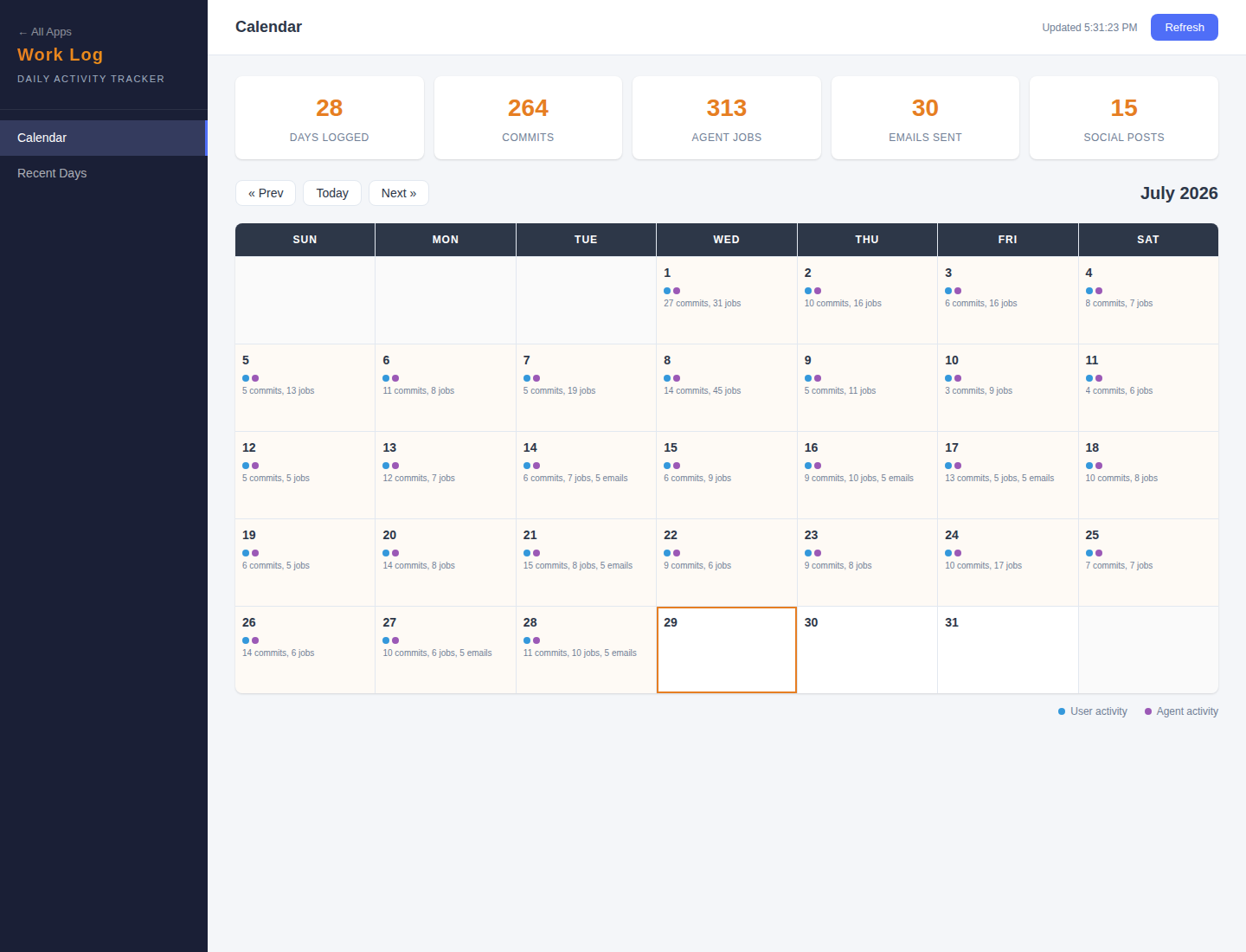
- Commits: 7 total (0 agent, 7 Matt)
- Agent jobs run: 34
- Prospects added: 0
- Emails sent: 0
- Social posts: 1
- Article and deployment receipts: 12
- Mature WIMPER pilot sends: 20
- Verified WIMPER pilot replies: 0
- LinkedIn connections reviewed: 3,252
- LinkedIn message records reviewed: 8,109
- Private relationship queue: 6 people
- Next broker packet: 4 recipients, review only
- WIMPER site build: 74 pages
- Production pages checked on desktop and mobile: 6
The most important number is 0.
Zero replies stopped the scale candidate. Zero new prospects meant the system did not refill the pipeline with looser targets. Zero life-settlement drafts meant existing coverage was respected instead of duplicated.
The six-person queue matters for the same reason. It is what remained after a large archive passed through profession fit and real relationship history. The system got smaller because the evidence got stricter.
What’s Next
Review the six-person relationship queue and the four-recipient broker packet manually, keep broad sending off, and authorize at most a small test only if the profession and relationship evidence survive review.