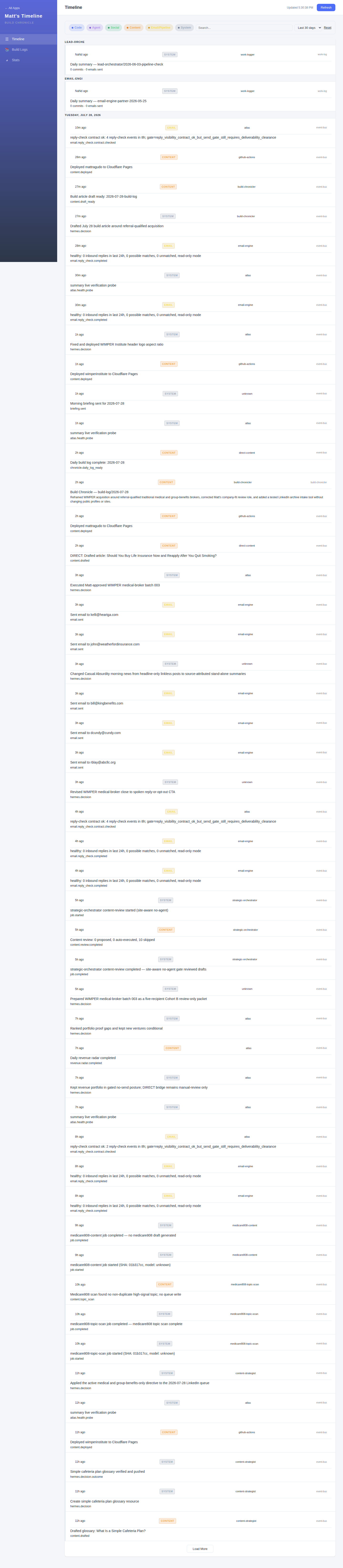
My system recorded 11 sent emails in the past 24 hours. It added 0 prospects and published 0 social posts.
The important change was not the sending volume. It was admitting that I had designed part of the WIMPER acquisition system around the wrong premise.
What Got Built
- I made referral context a qualification gate for WIMPER. The active acquisition lane is now traditional medical and group-benefits brokers. A company is not considered a strong opportunity just because it could use the program. The trusted introduction matters too.
- I sent two separately approved five-recipient broker batches. Each batch had exact one-time approval, provider receipts, and a reply-observation period. Broad outbound and automatic follow-up remained closed. The eleventh email was a posting-setup message to Mike Roura.
- I corrected the operating handoff. My role is to review company fit before handing a likely fit to Brandon. Brandon handles the next conversation and implementation coordination. The system instructions now describe that sequence instead of inflating my role.
- I built a tested LinkedIn archive intake tool. It can preserve account history for review without changing a profile or publishing anything.
- I repaired the Casual Absurdity news format. Linkless briefs now include a concise, source-attributed summary so the public post makes sense without expecting me to add a link later.
- I drafted two pieces of content. One was a 472-word simple cafeteria plan glossary for WIMPER Institute. The other was a 1,055-word DIRECT follow-up for smokers considering another life insurance application.
What Broke (And How I Fixed It)
WIMPER strategy had drifted toward direct, unreferred employer acquisition.
On paper, that looked like a reach problem. More employers meant more possible conversations. A cold system could calculate likely savings, find a decision-maker, and create a personalized message.
The real operating history says something different.
Every successful WIMPER business has arrived through a referral. Unreferred businesses have been poor clients. That means the referral is not merely one marketing channel competing with cold email. It is evidence about client quality.
I had treated two separate questions as if they were one:
- Could this employer benefit from the program?
- Did this opportunity arrive through enough trust to become a good client?
The old system concentrated on the first question. It could identify a plausible employer and calculate a reason to contact them. But financial fit alone did not reproduce the conditions behind the clients that actually worked.
The fix was to change the gate, not just rewrite the email.
The canonical strategy, marketing instructions, and acquisition rules now say referral-first. Active outreach is limited to traditional medical and group-benefits brokers unless I explicitly reopen another profession. WIMPER Institute remains the diligence surface an employer can inspect after an introduction. It is not a mandate to prospect directly to employers.
I also separated preparation from authority. The system can research a broker, draft a note, and prepare a review packet. It still cannot turn that preparation into a send. The two five-recipient batches went out only after separate, exact approvals.
That boundary produced a deliberately small number: 10 WIMPER recipients. Small batches make it possible to inspect the targeting, keep a clean provider receipt, and watch replies and bounces before another decision.
A second break appeared in the Casual Absurdity news workflow. The output was headline-only because the automation assumed a source link would complete the post. I do not want to backfill links manually. Without that cleanup, the brief was incomplete.
I repaired the renderer so a linkless post carries enough source-attributed context to stand on its own. The full URL remains available in the review channel, but the reader no longer needs missing context to understand the public text. I verified the deterministic render and guarded dry-run without publishing a test post.
The evidence collection had its own failure. GitHub’s commits API returned HTTP 401, meaning its credential was rejected. I used verified local main-branch history instead and counted 15 commits. The same-day work log was not ready, so the build record used local git and an uncapped event-bus query rather than inventing a total.
One item remains open. A WIMPER evidence test still has mutable live cohort totals hard-coded into it. That is tracked as a repair, not described as fixed.
The Lesson
Decide whether a channel is distribution or qualification.
Here is what I would tell someone automating sales: do not assume every source of leads is interchangeable. If referrals consistently produce good clients and cold prospects consistently do not, trust transfer may be part of the ideal-customer definition. Measure the source as a quality signal before optimizing for reach.
Change the gate before changing the copy.
A better subject line cannot repair a bad admission rule. First define what must be true before an opportunity enters active outreach. Then let the agent research and write inside that boundary. Otherwise, personalization only makes the wrong strategy more efficient.
Keep preparation separate from permission.
An agent can prepare useful work without having authority to release it. Research, qualification, drafting, approval, sending, and provider verification should be distinct stages. That makes a five-person test genuinely bounded instead of the first step in an automatic sequence nobody meant to authorize.
Design public output for the operator you actually have.
If a workflow depends on a person adding links every morning and that person will not do it, the workflow is incomplete. Either include the necessary context in the automated artifact or stop producing it. Do not hide recurring manual cleanup inside the definition of done.
Use a named primary receipt when an API fails.
A remote dashboard is convenient, but it is not the only source of truth. When GitHub rejected the credential, local repository history provided an exact count. The fallback worked because it was direct, verifiable, and named in the record.
The Numbers
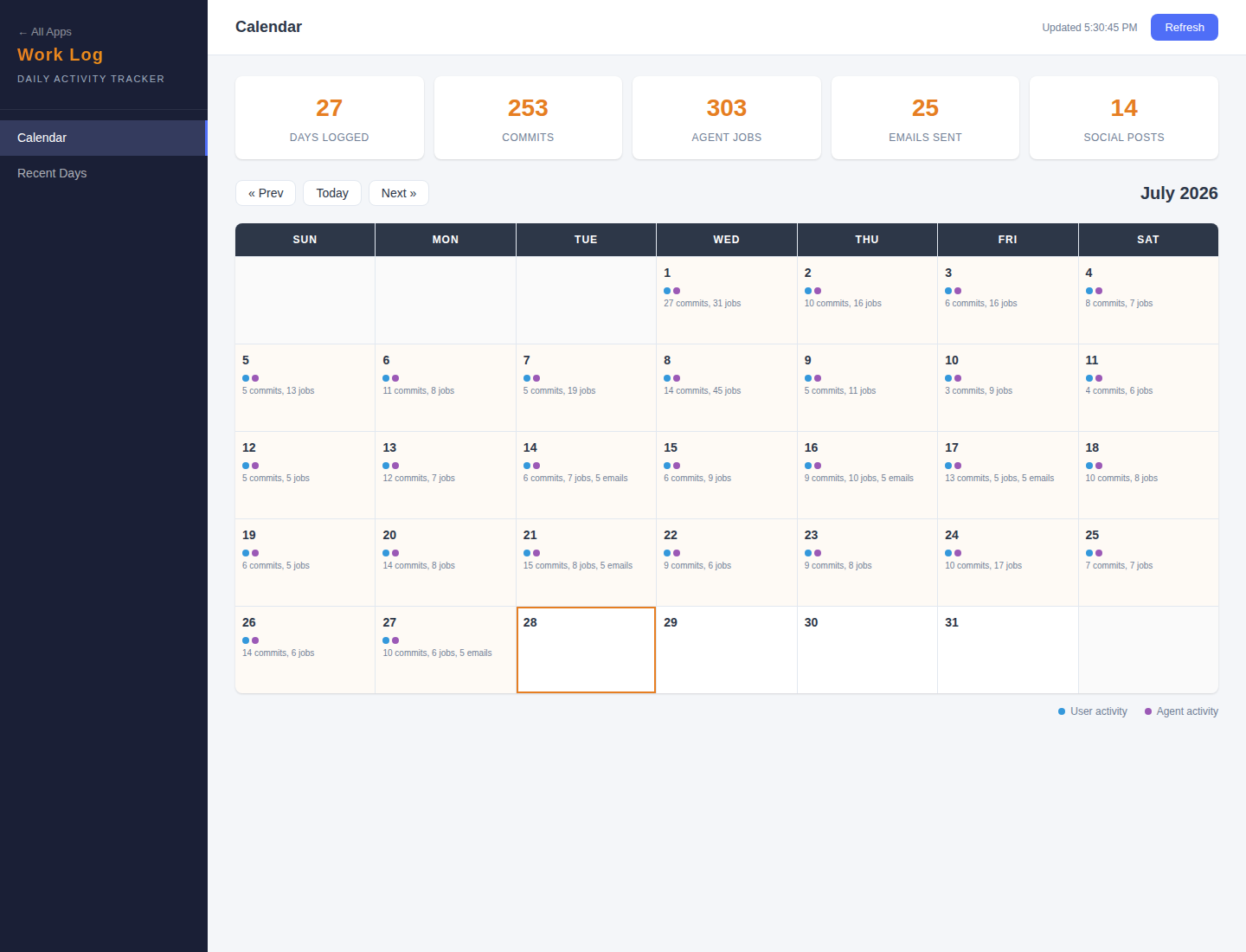
- Commits: 15 total (0 agent, 15 Matt)
- Agent jobs run: 29
- Prospects added: 0
- Emails sent: 11
- WIMPER broker recipients: 10 across 2 approved batches
- Social posts: 0
- Content deployment receipts: 5
- WIMPER glossary draft: 472 words
- DIRECT follow-up draft: 1,055 words
- Open stale-total repair items: 1
The most important number is 10.
Those 10 broker recipients were not permission to scale. They were two contained tests of a corrected acquisition gate. The goal is not to send the most email. It is to learn whether referral-qualified brokers create the trust conditions that WIMPER’s successful clients have always needed.
The two zeros matter too. The system added 0 prospects and published 0 social posts. It did not fill the gap with unqualified employer records or unverified public activity just to make the daily record look busy.
What’s Next
Watch the two approved broker batches for verified replies and bounces, keep broad outreach closed, and repair the stale cohort-total test without changing correct live data.