I revised the same public handoff twice before I trusted it on five production pages.
The problem was not a broken link or a failed build. It was language that made an employer-benefits service sound broader than the work we actually perform.
What Got Built
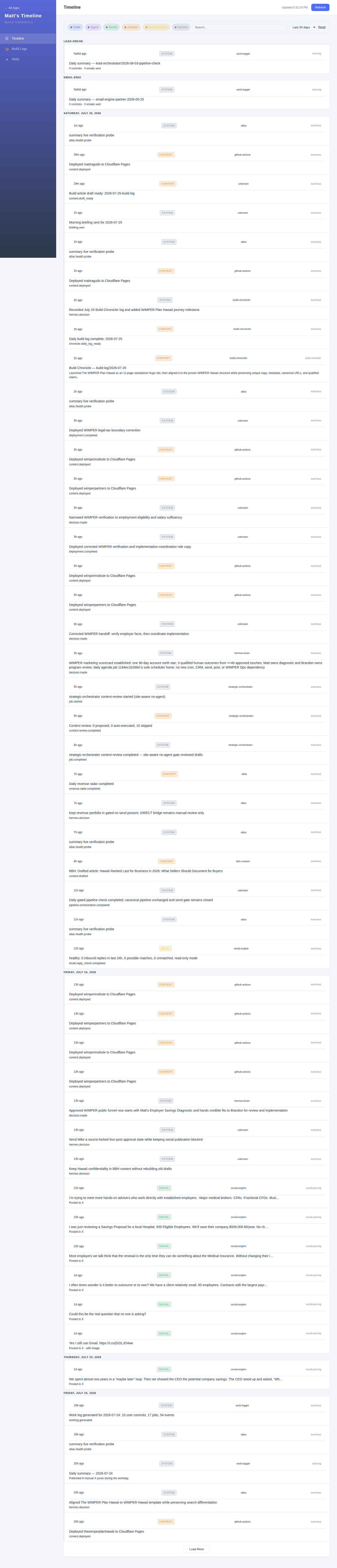
- I launched The WIMPER Plan Hawaii as an 11-page standalone site. It uses the structure that already works on WIMPER Hawaii, but keeps its own copy, metadata, canonical URLs, and claims instead of becoming a duplicate with a different logo.
- I rebuilt the public WIMPER handoff around named owners and three verified facts. I am now the first contact for the Employer Savings Diagnostic. WIMPER verifies full-time status, benefit eligibility, and sufficient salary. Brandon coordinates the implementation work across the people, paperwork, and procedures involved.
- I created a 90-day WIMPER marketing scorecard without creating another scheduler. One attributable employer account is the north star. The near-term gate is three qualified human outcomes from no more than 40 approved touches. The existing weekday owner agenda remains the one place where the scorecard is reviewed.
- I moved approved content while keeping distribution controls intact. Three WIMPER articles published, 19 deployment receipts were recorded, a Business Broker Hawaii seller-readiness article was drafted, and Mike Roura received a four-post approval slate. His posts still cannot publish without approval.
- I replaced Hermes’ embedded SQLite runtime and added document tools. SQLite is the single-file database engine used by parts of the system. The replacement moved it to version 3.51.3, passed 485 focused tests, and survived a live create-search-delete check. I also tested a small Python stack for DOCX, XLSX, and text-based PDF work.
What Broke (And How I Fixed It)
The original WIMPER copy used phrases such as “technical review” and “detailed review.” Those words sounded responsible. They were also too broad.
A reader could reasonably interpret them as legal, tax, plan-design, or compliance review. That was not the promise I intended to make.
The first correction narrowed the review, but the handoff was still imprecise. It did not clearly say who spoke to the employer first, what WIMPER actually verified, or who coordinated the work after the diagnostic.
So I stopped editing adjectives and rewrote the operating boundary as a sequence:
- Matt owns the first conversation and the Employer Savings Diagnostic.
- WIMPER verifies three facts: full-time status, benefit eligibility, and enough salary for the proposed arrangement.
- Brandon coordinates implementation across the parties, paperwork, and procedures.
The public copy also states what WIMPER does not do. It does not describe this verification as a broader legal or tax review.
That final sentence matters. A boundary is stronger when it names the excluded work instead of relying on the reader to infer it.
After the second correction, I deployed and checked five production URLs. No WIMPER Ops workflow changed. No outreach send was released. This was a public-promise correction, not permission for the automation to do more.
A separate publishing issue remained unresolved. Two CPA article paths that had moved were still appearing in the WIMPER Institute custom-domain cache. The Cloudflare Pages origin was clean, and the stale pages carried noindex, which tells search engines not to include them.
I could not directly purge the cache because the available Cloudflare token lacked that permission. I recorded the issue as a bounded verification warning rather than saying it was fixed.
The daily evidence collection also hit an HTTP 401 from the GitHub commits API. That means the credential was rejected. I used verified local git history and counted 11 commits instead of estimating the missing remote result.
The Lesson
Turn regulated copy into a responsibility map.
Here is what I would tell someone using an agent to write public copy for insurance, benefits, finance, or healthcare: do not approve words such as “review,” “validate,” or “ensure” by themselves. Name the person who owns first contact, list the exact facts the system checks, and name the person who owns the next handoff. If the service does not provide legal or tax advice, say that plainly.
Use nouns and facts instead of reassuring adjectives.
“Detailed review” sounds careful but does not create a testable promise. “Verify full-time status, benefit eligibility, and sufficient salary” can be checked against the real workflow. The safest copy is often more concrete and less impressive.
Keep one scheduler home for each operating decision.
The new WIMPER scorecard could have become another watcher, another alert, and another place for numbers to disagree. I attached it to the existing weekday owner agenda instead. One loop should have one review surface, one decision point, and a clear continue, revise, or stop outcome.
Do not turn a blocked repair into a claimed success.
The two stale cached paths are low-risk because the origin is clean and the responses carry noindex. They are still not purged. When the credential cannot perform the repair, report the containment and the missing permission separately.
The Numbers
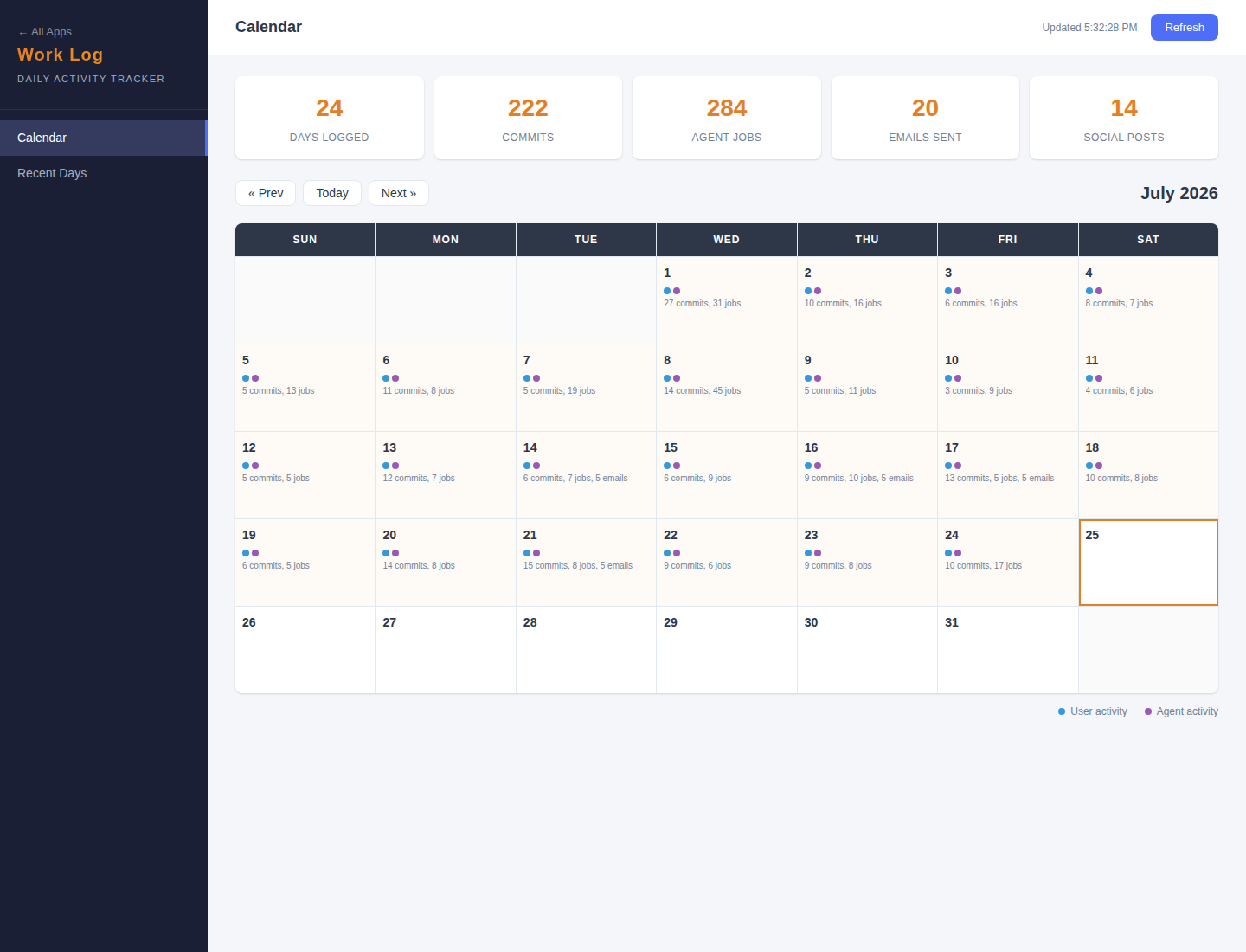
- Commits: 11 total (0 agent, 11 Matt)
- Agent jobs run: 28
- Prospects added: 1 event receipt; canonical intake remains unreconciled
- Emails sent: 0
- Social posts: 4
- Content published: 22
- New site pages: 11
- Production URLs checked after the copy correction: 5
- Public-copy correction rounds: 2
- Deployment receipts recorded for approved WIMPER content: 19
- Focused SQLite tests passed: 485
- Stale cached article paths still awaiting purge: 2
- WIMPER marketing north star: 1 attributable employer account in 90 days
- Near-term gate: 3 qualified human outcomes from no more than 40 approved touches
The most important number is three.
WIMPER now verifies three named facts instead of promising an undefined “detailed review.” That smaller claim is more useful because an employer, an operator, or an auditor can test whether the public words match the actual handoff.
The other important number is two. Two correction rounds were cheaper than leaving one vague sentence live and letting every later page, email, and agent repeat it.
What’s Next
Verify the two stale cached paths after a properly scoped Cloudflare purge, then keep the 90-day scorecard in its existing weekday review loop without granting new send authority.