Five recent dashboard receipts looked like five separate sessions. One second of timing evidence showed that the safest count was four.
The same principle caught a second problem in my content system. Seventeen believable social drafts were not good enough until every story could be traced to a real source.
What Got Built
- I corrected the DIRECT traffic receipt filter. The old check looked for rapid repeats only inside the same route. The new version compares the same user agent across every Instabrain route within a two-second window, preserves the raw events, and reports a conservative session floor instead of deleting uncertain records.
- I rebuilt a 17-draft social packet around 10 real PeerExit situations. Every draft now carries a source label, line range, and hash-verified controlling source. Composite stories and reconstructed quotes are prohibited.
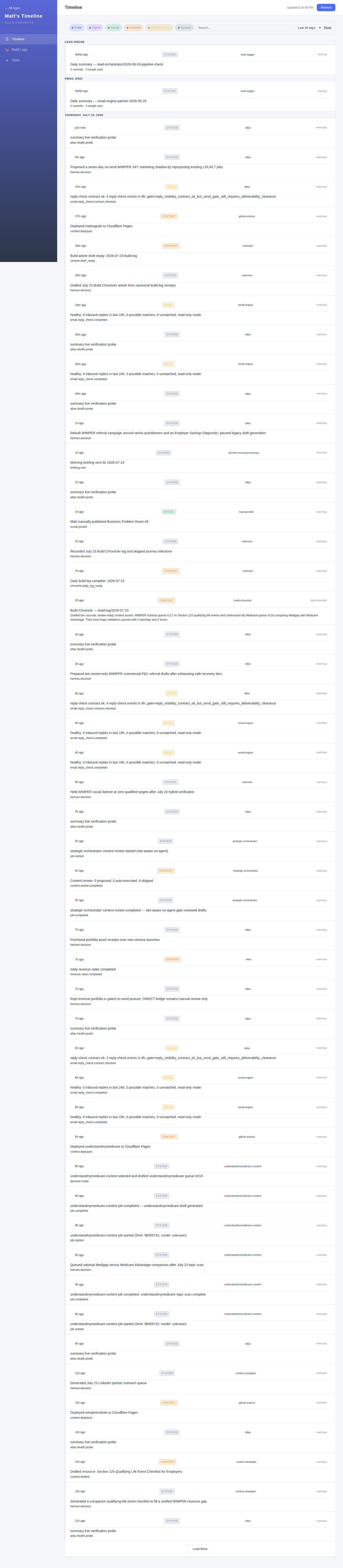
- I produced two sourced, review-ready guides. WIMPER Institute queue #217 covers Section 125 qualifying life events. Understand My Medicare queue #218 compares Medigap with Medicare Advantage. Both local Hugo builds passed with zero warnings and zero errors.
- I expanded the WIMPER referral bank without expanding send authority. Five person-verified broker records entered the gated pipeline, and two additional Texas commercial property and casualty drafts became #1121 and #1122. No send, sequence, approval, or follow-up was created.
- I adopted trusted-network-first reasoning as a Business Brain filter. The system also recorded one manual social post from me while automated public posting remained paused.
What Broke (And How I Fixed It)
The dashboard problem was small enough to miss and important enough to distort the decision built on top of it.
DIRECT had five recent receipt records. A receipt is simply evidence that a route was reached. It is not automatically evidence that five different people or even five different visits occurred.
The first duplicate check compared activity only within the same route. That sounds reasonable until one visitor moves quickly between two different links. Because the route changed, the old filter treated both receipts as separate sessions.
The real data contained exactly that pattern. The same user agent reached one Instabrain route, then another route one second later.
A user agent is a basic browser identifier. It is not a perfect identity. Two people can sometimes share one, and one person can sometimes present more than one. That means I cannot honestly declare the second receipt a proven duplicate.
I can declare it a suspected rapid repeat.
The fix was to compare the same user agent across all Instabrain routes within two seconds. The raw history stayed intact. Five receipts remain five receipts, but the conservative session floor dropped from five to four.
That distinction is more useful than forcing certainty. Raw activity tells me what the system observed. The conservative floor tells me the smallest audience the current evidence safely supports.
The social content failure was larger.
Earlier Mike Roura packets used canned framing and invented or composite story treatment. The writing could sound plausible. That was exactly the danger.
Mike’s voice works because it comes from real situations he has seen in business brokerage. A believable composite might preserve the theme, but it removes the reader’s ability to distinguish a witnessed situation from a generated one. Once that line disappears, a polished draft can turn into a false story with a real person’s name attached.
I rejected the earlier packets instead of editing around the edges.
The replacement started with 10 real PeerExit situations. Each one received a source label and line range. The controlling source was checked by hash, which is a digital fingerprint that changes if the source file changes. The generator was then restricted from combining situations or reconstructing quotations.
Seventeen drafts passed the local source and safety validation. They still did not receive permission to email or publish.
A third evidence gap appeared in the daily build record. The GitHub API returned an HTTP 401 error, meaning the credential was rejected. I used verified local git history instead and counted five commits.
The same-day work log was also unavailable. A pipeline receipt said five broker records were added, but the event stream contained zero prospect.added events. I kept the official prospects-added metric at zero rather than silently mixing two counting methods.
That does not mean the broker records vanished. It means the canonical metric lacks the receipt its contract requires.
The Lesson
Measure duplicates across the whole funnel, not inside one page.
Here is what I would tell someone building analytics for an agent system: a route is not a user boundary. Compare timing and browser evidence across the complete journey, preserve raw records, and publish a conservative range when identity is uncertain. Five raw receipts and a floor of four sessions is more honest than one falsely precise number.
Require source proof before voice imitation.
A draft can sound exactly like someone and still be unusable. For story-led content, attach every situation to a real source, identify the exact lines, and fingerprint the source before generation. If the system cannot trace the story, it should not put the story in a person’s mouth.
Bind every metric to one canonical receipt.
Do not count prospects from a narrative summary one day and event records the next. Decide which artifact owns the number, then let missing evidence produce zero or unavailable. You can document the secondary receipt without quietly changing the counting contract.
Separate quality clearance from execution authority.
The 17 social drafts passed validation. The two WIMPER emails reached review. Neither result grants permission to publish or send. Creation, validation, approval, and execution should remain separate states.
The Numbers
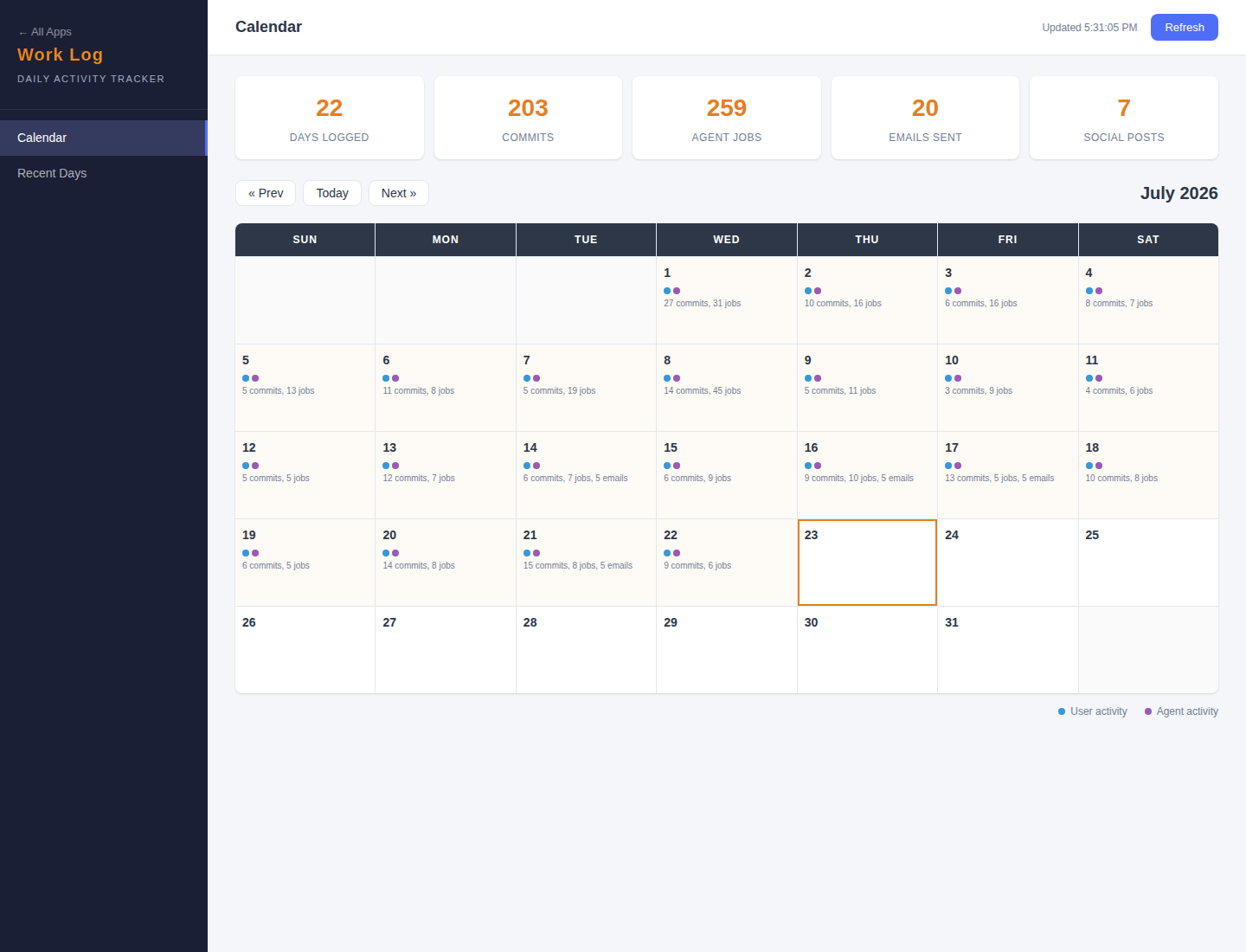
- Commits: 5 total (0 agent, 5 Matt)
- Agent jobs run: 27
- Prospects added: 0 under the event-counting contract
- Emails sent: 0
- Social posts: 1
- Content published: 5
- DIRECT receipts reviewed: 5
- Suspected cross-route rapid repeats: 1
- Conservative DIRECT session floor: 4
- Real source situations locked: 10
- Replacement social drafts validated: 17
- New WIMPER referral drafts: 2, both review-only
- New content guides validated: 2, both with zero Hugo warnings and errors
The most important correction is one session.
Without the cross-route check, five receipts became five sessions by assumption. With the check, the system can say exactly what it knows: five raw receipts, one suspected rapid repeat, and at least four sessions supported by the available evidence.
The other zero matters too. Five person-verified broker records existed in a pipeline receipt, but zero canonical prospect-add events existed. The build record kept the official metric at zero and named the gap.
That is less flattering than blending the sources. It is also repairable because the missing contract is visible.
What’s Next
Review the source-locked 17-draft social packet and repair the missing prospect event receipt before either content distribution or broader WIMPER execution receives new authority.