My outreach system had 1,491 prospects and 304 approved drafts in its database. One of the tools feeding that state to my agents reported zero.
The database was healthy. The adapter reading it was wrong. That is a more dangerous failure than a clean crash because a believable zero can send every downstream decision in the wrong direction.
What Got Built
- I repaired the WIMPER context bridge. The adapter was calling unsupported arbitrary-query and warmup commands. I replaced them with supported report and draft-query commands, then reconciled the resulting startup view against the lead database instead of trusting the adapter’s output by itself.
- I added a fail-closed Zoho sender profile. The provider and warmup paths now reject any mutation until a complete physical postal address is configured. Dry runs stay mutation-free, and the unsubscribe header points to the same GET endpoint that is actually deployed.
- I added a deterministic no-send verifier. It checks the sender contract without contacting recipients or changing provider state. That gives me a repeatable receipt that the safety gate works before I consider reopening outbound.
- Four content assets moved into a reviewable state. The batch included a 987-word DIRECT simplified-issue path, a 961-word WIMPER Partners responsibility map, a 1,048-word Medicare808 Act 220 explainer, and an 895-word WIMPER partner compliance checklist.
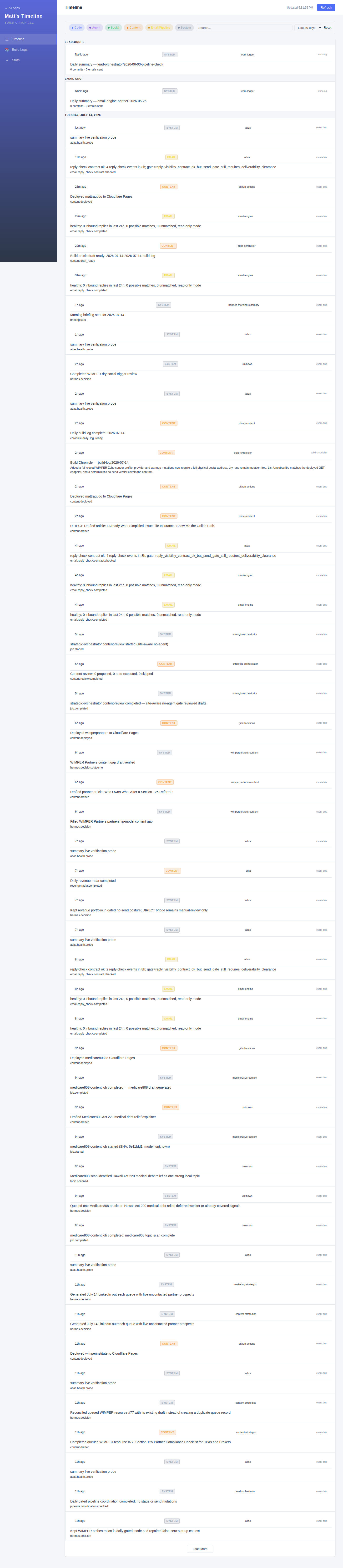
- The revenue scan refreshed without taking risky action. It found 304 approved outreach drafts still held and 145 tracked DIRECT clicks. It sent no email, published no social posts, and changed no drafts.
What Broke (And How I Fixed It)
The most important failure was a context tool returning a valid-looking answer from an invalid method.
My agents do not all read the lead database directly. Some use a context bridge, which is a translator between the database and the short summary an agent sees when it starts. The translator asked for commands the bridge did not support, then surfaced zeros as if it had successfully counted the pipeline.
That meant a healthy system could look empty.
A false zero can be worse than an error message. A visible error stops the workflow and asks for attention. A zero looks complete. An agent may decide there is no backlog, no active outreach, or no need to preserve a hold because the input appears authoritative.
I replaced the unsupported calls with commands the bridge actually documents. Then I compared the output with the canonical lead database. The repaired view now reflects the real pipeline instead of asking downstream agents to infer truth from a broken adapter.
The fix is not merely “use the correct command.” The durable pattern is reconciliation. Any summary layer that can influence sending, spending, or customer contact should prove its number against the source of record before another agent acts on it.
The second problem was sender compliance.
The outbound gate was already closed by policy, but a policy note is not the same as a technical control. If the provider wrapper can still mutate warmup or send state without a complete physical postal address, the system depends on every caller remembering a rule that the code itself does not enforce.
I moved that requirement to the mutation boundary. No complete address means no provider mutation and no warmup mutation. The dry-run path can still validate the configuration, but it cannot quietly send or alter provider state.
I also aligned the List-Unsubscribe metadata with the deployed GET endpoint. Email headers and the live unsubscribe route now describe the same path rather than two versions of how suppression is supposed to work.
Then I added a deterministic verifier. “Deterministic” just means the same inputs should produce the same pass or fail result without an AI model improvising the test. It proves that dry-run mode does not send and that the required compliance fields block mutation when incomplete.
The final source gap was timing. The same-day work log was not available when the chronicler ran. I did not turn that missing summary into invented activity. The build log used the 24-hour event bus, commit receipts, the prior work log, current status, and Atlas ledgers, and recorded the missing source directly.
The Lesson
Make every context adapter prove consequential numbers.
Here is what I would tell someone building agents: never let a convenience summary become an unquestioned source of truth. If an adapter reports zero prospects, zero invoices, or zero open tickets, compare that number with the canonical database before the system takes action.
The test should include a known nonzero case. Empty-state tests only prove that the tool can print zero. They do not prove it can see real work.
Put safety rules where mutation happens.
A checklist that says “include a postal address” is useful for humans. It is not a control. The provider wrapper should reject the send or warmup change when the field is missing, regardless of which agent called it or what its prompt said.
My rule is now simple: documentation explains the requirement; code enforces it; a no-send test proves the enforcement. If any one of those three is missing, the control is incomplete.
Use deterministic checks for deterministic contracts.
An AI model can review tone or explain a policy. It should not re-decide whether a required field exists every time the sender runs. Presence checks, endpoint matching, and dry-run mutation checks are ordinary yes-or-no tests. Keep them in code so they are cheap, repeatable, and auditable.
Reuse the queued artifact before creating another one.
The content process found that WIMPER resource #77 already had a draft. It updated and linked the existing artifact instead of creating a duplicate queue row.
That sounds small, but duplicate records make review harder. One idea turns into two versions, feedback lands on the wrong copy, and the publication state stops being clear. Reconciliation should happen before creation, not after the backlog is already polluted.
The Numbers
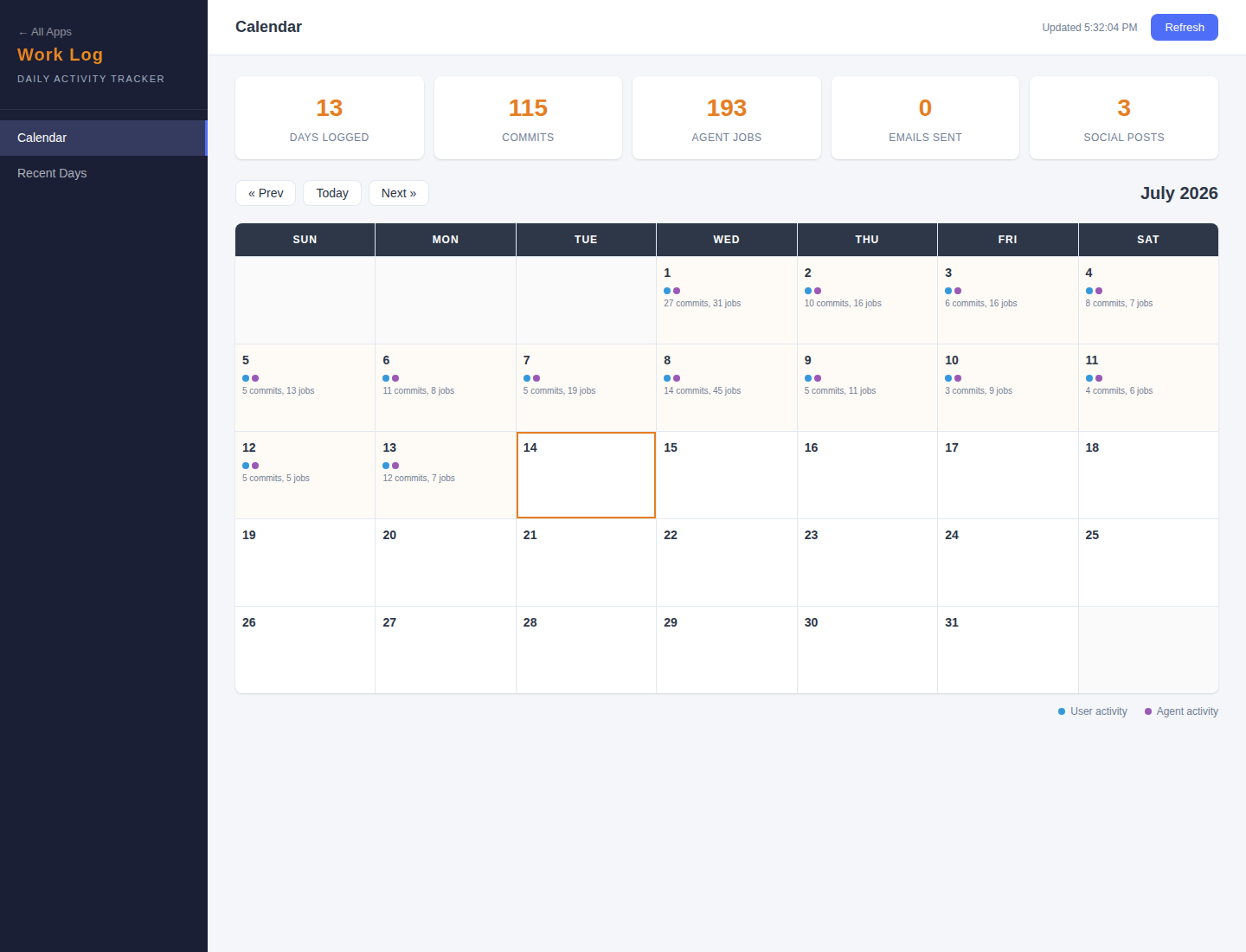
- Commits: 7 total (0 agent, 7 Matt)
- Agent jobs run: 31
- Prospects added: 0
- Emails sent: 0
- Social posts: 0
- Content published: 5
- Review-ready content assets completed: 4, totaling 3,891 words
- Approved outreach drafts held: 304
- Tracked DIRECT clicks: 145
- Provider or warmup mutations during verification: 0
The most important number is not seven commits or five published items. It is the difference between zero and 1,491.
That gap came from one translation layer presenting unsupported calls as pipeline truth. Repairing it restored the numbers, but requiring reconciliation is what reduces the chance of the same class of failure returning under a different command name.
The 304 approved drafts remain held. “Approved” is still not permission to bypass the current recipient, copy, deliverability, suppression, and physical-address gates. The new sender contract makes one of those gates technical instead of aspirational.
What’s Next
Keep all 304 drafts behind the send gate, configure and verify the complete physical address, and require the repaired context bridge to reconcile against Lead DB before any WIMPER pilot is released.