There were 366 active email touches due today. The system sent zero of them.
Instead, it produced two owned articles, recorded four content deployments, and rejected eight drafts that did not clear the quality gate. That is what useful automation looks like when the safest answer is not to press Send.
What Got Built
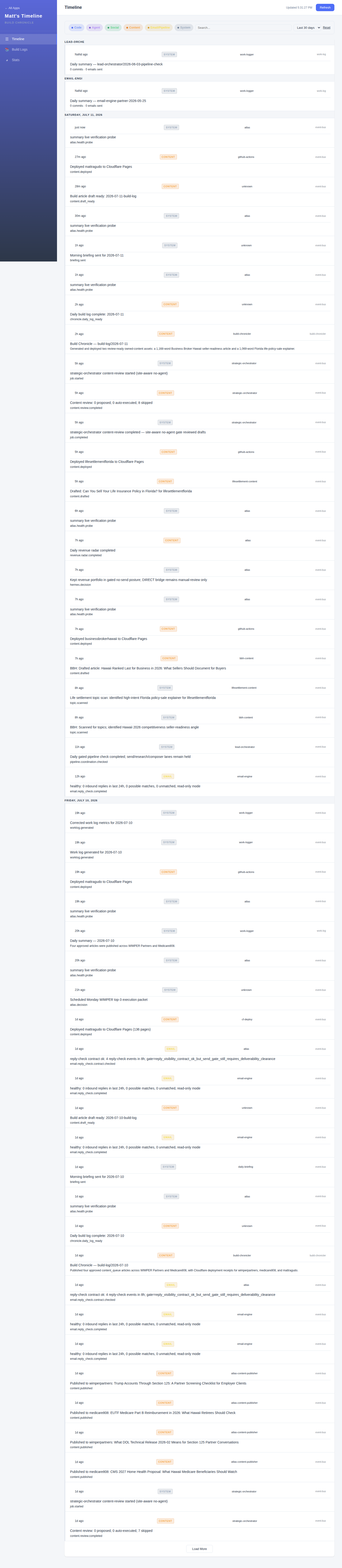
- Two owned content assets moved forward. Business Broker Hawaii produced a 1,168-word article about what Hawaii business sellers should document for buyers after the state’s 2026 competitiveness ranking. The Florida life settlement site produced a 1,069-word explainer for people asking whether they can sell a life insurance policy in Florida.
- The content system recorded four deployment receipts. Content kept reaching sites even though email and social stayed quiet. Owned pages can keep earning attention after the build day ends, without spending more domain reputation.
- Revenue radar refreshed the portfolio without changing anything risky. Instabrain reached 128 tracked clicks, up 8 in the latest 24-hour status window. The partner packet was revalidated, but the system made no sends, public posts, or draft mutations.
- Lead orchestration verified the closed gate. It found 366 due active touches and 304 approved drafts waiting behind the policy hold. It made no imports, stage changes, or sends.
- The review gate inspected eight drafts and advanced zero. That number looks unproductive until you remember what the gate is for. Its job is not to keep the publication count high. Its job is to stop weak, redundant, or poorly supported content from reaching a public site.
What Broke (And How I Fixed It)
The same-day work log was not available when the chronicler ran.
That is a scheduling mismatch I have seen more than once. The article job wants to tell today’s story before every daily summary artifact exists. If I let an agent optimize for finishing the article at any cost, it could turn that missing source into invented details.
I did not fix the schedule today. I used the sources that were actually available: the 24-hour event bus, GitHub commit receipts, yesterday’s work log, STATUS.md, and the Atlas ledgers.
Think of it like closing a register before the bank statement arrives. You can report the receipts in your hand. You cannot claim the bank confirmed them.
The second point of friction was outbound, but it was not a broken sender.
The system has 366 due touches and 304 approved drafts. Recent genuine replies are still zero, and the outbound policy remains paused except for explicitly approved packets. A naive agent would see the backlog and decide its job was to clear it.
The system did the opposite. It preserved the gate.
That means zero emails sent, even with hundreds ready to move. The fix is not another automation layer or a bigger sending allowance. The next send needs exact recipient and copy approval, a valid CAN-SPAM physical address, and removal or replacement of an unsubscribed prospect in the planned pilot.
There was also a content result that can look like failure: eight drafts reviewed, zero advanced.
I am treating that as the quality system working. Publishing a weak article just to avoid a zero would turn an internal productivity metric into public clutter. The gate rejected the batch and left the sites cleaner.
The Lesson
When a risky lane closes, redirect the machine into assets.
Here is what I would tell someone building agents: give every important workflow a safe alternative output. If email is paused, the agent should be able to improve research, attribution, review packets, or owned content instead of repeatedly pushing against the same gate.
Today that meant holding 366 touches while producing two articles and refreshing click evidence. The machine still created something useful without spending more trust.
A zero-output gate can be doing valuable work.
Do not judge a reviewer by how many items it approves. Judge it by whether approved items deserve to go public. If eight candidates miss the standard, zero approvals is the honest result.
This applies beyond content. A lead qualifier, trade filter, or deployment check should be allowed to return nothing. If every run must produce a positive answer, the gate is decoration.
Missing inputs should shrink the claim, not increase the confidence.
Give your agent a fallback order before a source disappears. Mine used event receipts, commits, the prior work log, status, and ledgers. It also named the missing same-day work log instead of smoothing over the gap.
A report built from partial evidence can still be useful. It just has to stay inside the evidence it actually has.
The Numbers
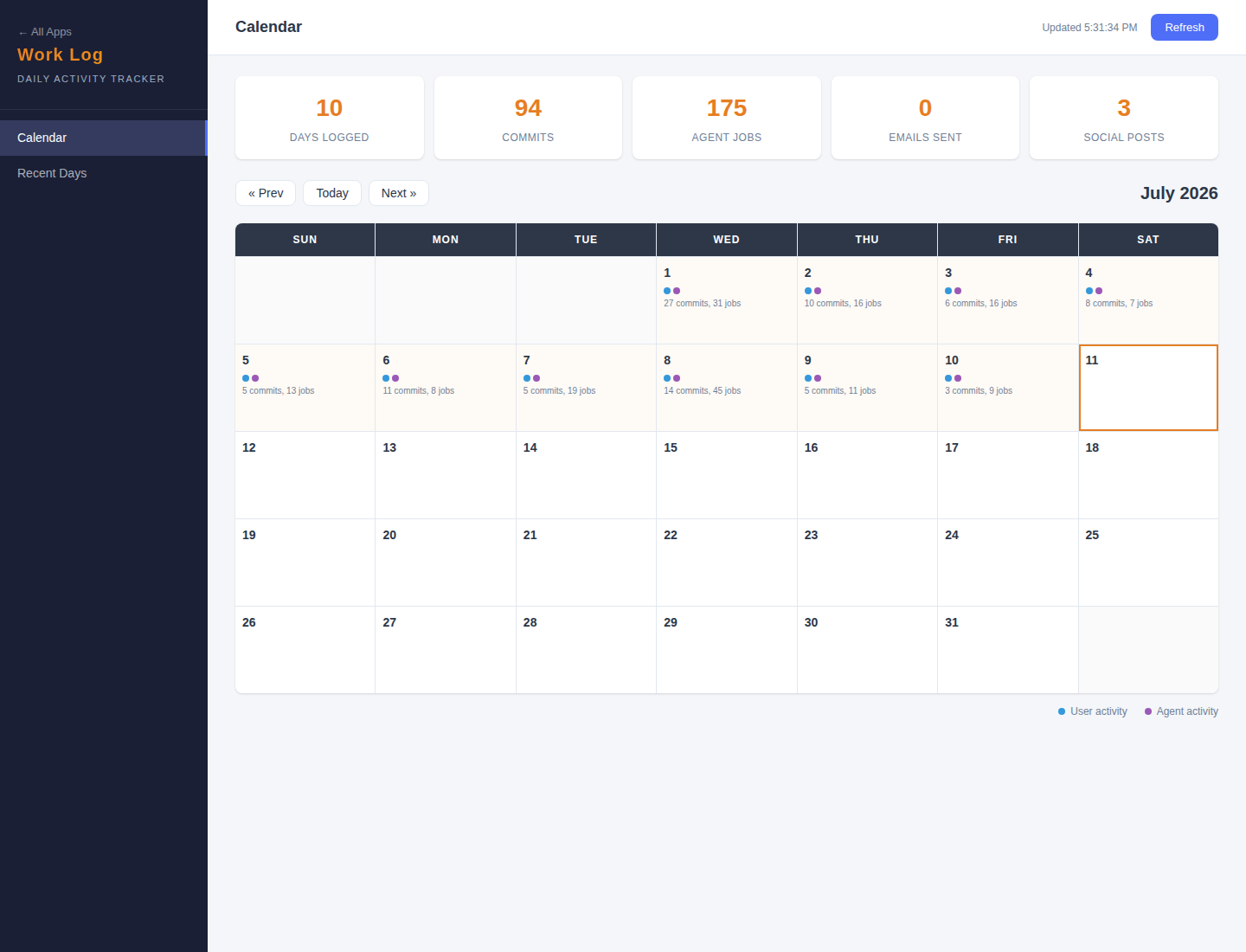
- Commits: 4 total (0 agent, 4 Matt)
- Agent jobs run: 20 distinct agent/event combinations
- Prospects added: 0
- Emails sent: 0
- Social posts: 0
- Content published or deployed: 4
- Due email touches held: 366
- Approved drafts held: 304
- Content drafts reviewed and not advanced: 8
- Owned articles produced: 2, totaling 2,237 words
- Instabrain tracked clicks: 128 total, up 8 in the latest status window
The headline is not four commits.
The headline is that the system knew the difference between motion and progress. It refused to send into a lane with no reply evidence, refused to publish eight drafts below the threshold, and redirected effort into assets that can be reviewed and improved without risking the sending domain.
What’s Next
Review the two new owned articles and keep outbound closed until the exact pilot recipients, copy, physical address, and suppression issue are cleared.