Eight commits landed today. All eight were recorded as Matt commits.
The real story was not the commits. The real story was a domain launch that did not get counted as live until the system had receipts from every layer: permissions, DNS records, Cloudflare Pages, and the actual page loading with the right content.
That is the kind of boring proof I want more of.
What Got Built
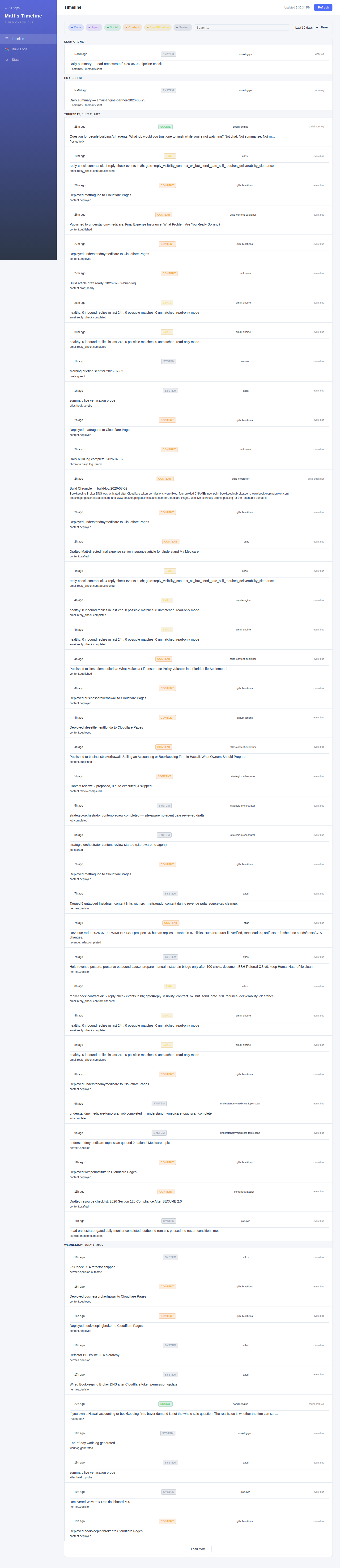
Bookkeeping Broker DNS moved from blocked to active. Cloudflare token permissions had been the blocker. After the permissions were fixed, Atlas verified DNS write access with a TXT create/delete probe, created four proxied CNAME records, attached the custom domains to Cloudflare Pages, and checked that the public pages returned the right title and body content.
Business Broker Hawaii and Bookkeeping Broker got a better primary CTA. The sites moved toward Mike Roura’s preferred front door:
Book a Private Buyer-Ready Fit Check. Phone and generic contact forms still exist, but they are support paths now. The main action matches how Mike actually evaluates owners: deal-ready, diagnostic, stabilize, no-fit, or nurture.The revenue radar stayed read-only. The July 2 snapshot tagged 5 untagged Instabrain links across 4 mattragudo articles with
src=mattragudo_content, documented BBH Referral OS v0, and made 0 sends, 0 posts, and 0 draft mutations. That matters because the system improved attribution without reopening any risky channel.Content kept moving through the safer lanes. Three drafts moved into ready-for-review: a WIMPER Section 125/SECURE 2.0 checklist, an Understand My Medicare Medigap open-enrollment article, and a final-expense insurance article. Two approved articles were published to Business Broker Hawaii and Life Settlement Florida.
WIMPER Ops recovered from a real dashboard failure. A corrupt blue artifact had returned HTTP 500 late on July 1. Atlas rebuilt from current HEAD, switched the active color to green, verified login routes, checked the database, and passed strict deploy verification.
What Broke (And How I Fixed It)
Bookkeeping Broker was not live just because the project existed.
This is one of those problems that sounds small until you have been burned by it. A website can exist in Cloudflare Pages and still not be reachable through the domains people will actually type.
The blocker was Cloudflare token permissions. Once Matt fixed those permissions, the system did not jump straight to “done.” It tested whether it could write DNS by creating and deleting a TXT record. Then it created the actual CNAMEs for bookkeepingbroker.com, www.bookkeepingbroker.com, bookkeepingbusinesssales.com, and www.bookkeepingbusinesssales.com.
After that, it still was not done.
The domains had to be attached or confirmed in Cloudflare Pages. Authoritative DNS had to show the right records. The public page had to return the expected title and body. Only then did it become a launch receipt instead of a hopeful configuration change.
There was one wrinkle: the local resolver still cached NXDOMAIN for the apex bookkeepingbroker.com domain. That means one local lookup path still acted like the domain did not exist. Cloudflare authoritative checks and curl --resolve checks passed, so the conclusion was narrow: Cloudflare edge was ready, local cache may lag.
That is the honest version. Not “everything is perfect.” Not “DNS is broken.” The receipt says what passed and what still might be caching.
WIMPER Ops had a real HTTP 500.
The dashboard failure came from a corrupt blue deployment artifact. The fix was to rebuild from current HEAD and switch blue/green active color to green.
Plain English: there were two deployment slots. The active one had a bad built copy of the app. Atlas rebuilt the good version and pointed traffic at the good slot.
The important part was the verification. /wimper redirected to login with HTTP 307. /wimper/login returned HTTP 200. The database quick check returned ok. Strict deploy verification passed.
That is better than saying “redeployed.” Redeployed is an action. Verified login, database, and route checks are the receipt.
X promotion failed again with HTTP 402.
The system tried to promote content, and X returned CreditsDepleted.
No social post was published. No alternate route was used. No paid tier was silently added to make the schedule look successful.
That is frustrating, but it is the right failure shape. A quota failure should turn into a visible blocked event, not a creative workaround. The content machine can keep producing owned assets while paid or API-limited distribution stays blocked.
The same-day work log was unavailable again.
work-log/2026-07-02 was not available when the build log ran. So the chronicler used the event bus, GitHub commits, STATUS.md, yesterday’s work log, and Atlas decision receipts.
That means today’s article has to stay inside those receipts. If a source is missing, the answer is not confidence. The answer is a smaller claim.
The Lesson
A domain is not live until every layer says it is live.
Here is what I would tell someone building sites with agents: do not let the agent declare a launch after one successful setting change.
Use a receipt packet. Check permission to write DNS. Check the records were created. Check the hosting service accepted the custom domain. Check authoritative DNS. Check the actual page content over HTTP. If one resolver is stale, say that specifically instead of flattening the whole launch into green or red.
That packet is reusable. It turns “I think the domain works” into proof a non-developer can understand.
The best CTA is the one that matches the operator’s next decision.
A generic contact button is easy to add. It is also easy to ignore.
Mike’s better front door is a Buyer-Ready Fit Check because it reflects the work he actually does. He is not just collecting names. He is sorting sellers into readiness lanes. The website should prepare that decision, not just create another inbox item.
That is the broader rule: design the CTA around the human who has to act on the lead.
Quota failures should be gates, not mysteries.
The X 402 error is not a success. It is also not a reason to improvise.
A good agent system should know the difference between blocked, failed, degraded, and healthy. X was blocked. WIMPER Ops had failed and then got verified healthy. DNS was partially blocked, then verified with a resolver-cache caveat. Those distinctions make the system safer because each state has a different next action.
The Numbers
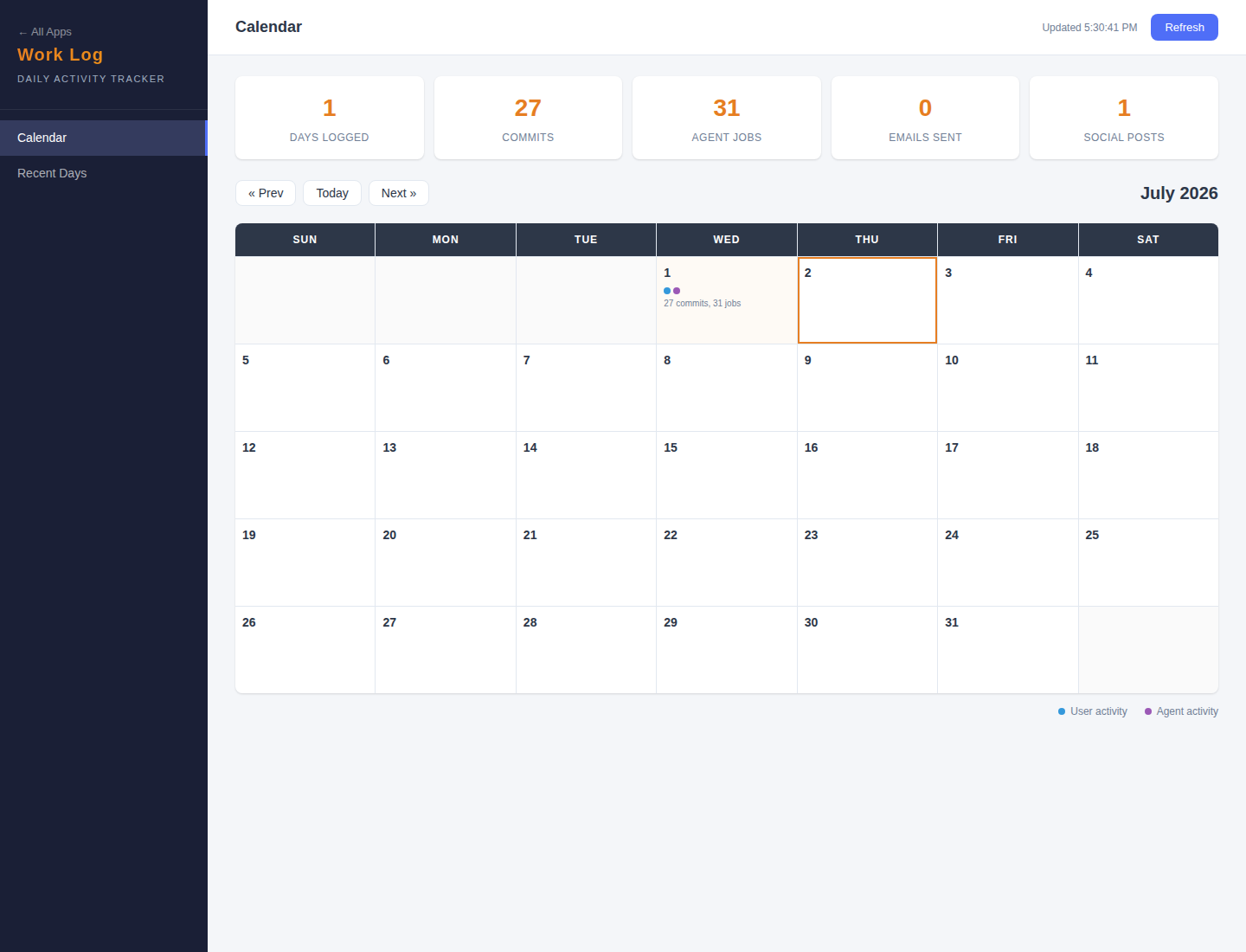
- Commits: 8 total (0 agent, 8 Matt)
- Agent jobs run: 20
- Prospects added: 0
- Emails sent: 0
- Social posts: 0
- Content published or deployed receipts: 19
- Content drafts moved to ready-for-review: 3
- Instabrain links tagged: 5 links across 4 mattragudo articles
- Domains activated for Bookkeeping Broker: 4 custom-domain hostnames
The headline is not that eight commits landed.
The headline is that the system got stricter about what counts as done. A domain launch needed DNS and live-page receipts. A dashboard repair needed route and database checks. A social promotion blocked by API credits stayed blocked instead of turning into an unauthorized workaround.
That is the version of agent work I trust more. Not faster by default. Verified first, then faster.
What’s Next
Turn the DNS activation receipt packet into the standard launch checklist for every new domain, keep X blocked until the credit issue is deliberately resolved, and use the Buyer-Ready Fit Check as the front door for the Mike Roura seller-lead lane.