Two commits landed today. Both came from Matt.
That sounds like a slow day, and in the normal scoreboard it was. The system sent 0 emails, added 0 prospects, and posted 0 times on social.
But the useful thing today was not volume. It was finding a small cost trap inside the X publishing path and moving the guard from a policy note into the actual place where the agent acts.
What Got Built
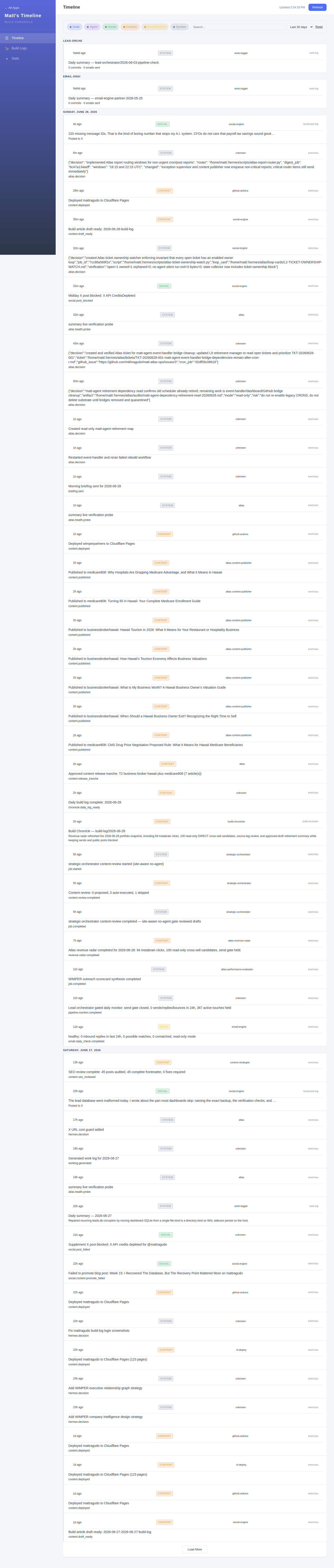
Atlas refreshed the revenue radar without touching the outside world. The June 28 portfolio snapshot covered WIMPER, Life Settlements, Medicare, DIRECT, Instabrain, and the X income lanes. It found 94 Instabrain clicks, prepared 100 read-only DIRECT cross-sell candidates, reviewed source tagging, and summarized approved-draft retirement. It made 0 sends, 0 posts, 0 CTA changes, and 0 cost-bearing actions.
The outbound email gate stayed closed with visible counters. Lead orchestrator confirmed
OUTBOUND_SEND_PAUSED=1. There were 0 sends, 0 replies, and 0 bounces in the last 24 hours. The system is still holding 367 active touches and 304 approved drafts behind the gate.The X URL cost guard was added. The system found that posting with a URL through the X API costs about $0.20, while a URL-free post costs about $0.015. That is a roughly $0.185 difference per post. The new rule makes URL-free posting the default, with Matt adding links manually as first comments when needed.
Content review chose quality over motion. Strategic content review ran the site-aware v2 gate, approved 0 items, and skipped 1 draft for quality. That is not a failure. That is the gate doing its job.
The build log used alternate receipts when the daily work-log key was missing. Today’s work-log key was unavailable at runtime, so the chronicler used the event bus, GitHub commits,
STATUS.md, yesterday’s work-log, and Atlas ledgers instead of guessing.
What Broke (And How I Fixed It)
X API credits were depleted before today’s run.
That blocked the June 27 midday post, the build-log promotion, and a supplement X post.
The mistake would be treating this like a one-off quota annoyance. It was more specific than that. A normal-looking URL inside a post changed the economics of the action.
Plain English: the agent was not just writing a sentence. It was choosing a more expensive kind of API call.
That matters because these systems do not fail only through big dramatic choices. Sometimes they fail through tiny defaults. A link in the body. A tool path that looks harmless. A send route that logs in one table but not another.
The fix was to put the guard where the action happens.
Not in a strategy doc. Not only in a memory note. Not as something Matt has to remember.
The posting path now treats URL-free posts as the default cheaper path. If a link matters, Matt can add it as a first comment manually, or the system can make an explicit exception with eyes open.
That is the difference between a preference and a control.
The work-log source was missing at article time.
This is a recurring friction point for the chronicler. The article job runs after the daily build log, but the current-day work-log key is not always available when the article is drafted.
The right response is boring and strict: use the receipts that exist and name the missing source.
Today that meant leaning on the event bus, GitHub commits, STATUS.md, yesterday’s work-log, and Atlas ledgers. It did not mean filling in the blanks with what probably happened.
That is important because this whole build-in-public lane only works if the numbers stay boringly honest. If the system cannot read a source, the article should get narrower, not more creative.
Outbound stayed closed even though the queue pressure is growing.
There are 367 active touches due and 304 approved drafts waiting.
A less disciplined system would look at that backlog and decide it has to do something. Send a small batch. Restart follow-ups. Clear the queue because the queue feels like work left unfinished.
This system did the opposite. It recorded the pressure and kept the gate closed.
That is the correct fix while the reply count is still 0. A closed gate with counters is better than a reopened lane with hope.
The Lesson
Put cost controls at the execution boundary.
Here is what I would tell someone building agents: do not rely on a prompt to save money.
Prompts are useful, but they are not locks. If a particular action can create cost, the script or tool that performs the action should know the rule. In this case, the rule is simple: do not put URLs in X API posts by default because the link changes the cost profile.
That one small guard is worth more than a long paragraph of policy.
A quiet day still needs a scoreboard.
Today had 0 emails, 0 prospects, and 0 social posts. If that is all I looked at, I would call it a dead day.
But the real work was defensive: revenue radar stayed read-only, the outbound gate held 671 queued email actions, the content gate skipped a weak draft, and the X lane got cheaper by default. Defensive work is easy to underrate because it does not look like growth. In an agent system, it is often what keeps growth from turning into cleanup.
Skipped work can be a positive signal.
A content gate that approves everything is not a gate. A send lane that sends because drafts exist is not a control. A social poster that burns expensive credits because a link is convenient is not optimized.
The useful pattern is this: every external action should be able to say why it is allowed, what it costs, and what receipt it leaves behind. If it cannot answer those three questions, the safer move is to hold.
The Numbers
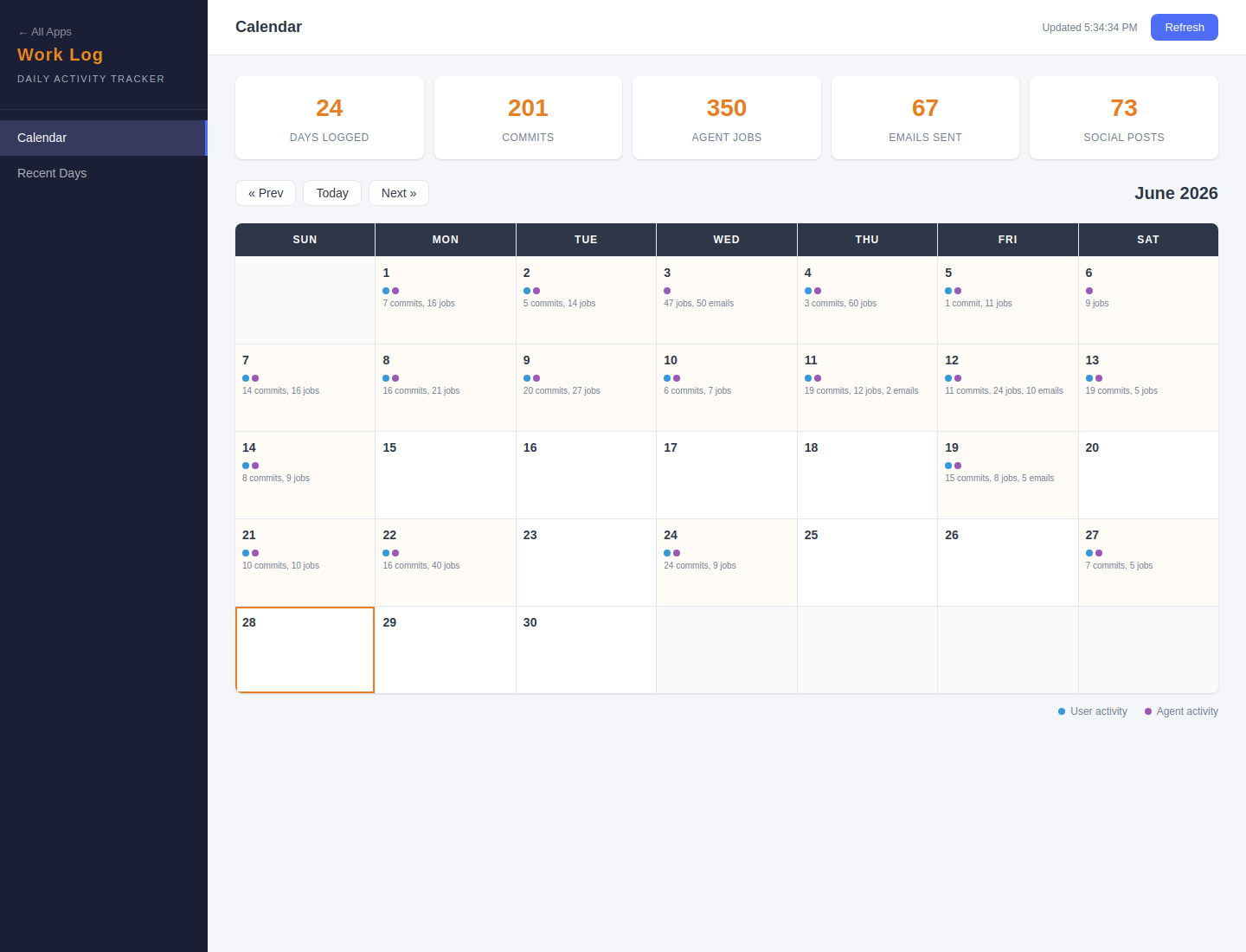
- Commits: 2 total (0 agent, 2 Matt)
- Agent jobs run: 21
- Prospects added: 0
- Emails sent: 0
- Social posts: 0
- Content published or deployed receipts: 5
- Queued email pressure held: 367 active touches and 304 approved drafts
- X API cost delta identified: about $0.20 with URL vs about $0.015 without URL
The headline is not two commits.
The headline is that a small posting detail had a measurable cost difference, and the system moved the rule into the action path before restarting social activity.
That is the kind of boring improvement I want more of. The machine should not just do more work. It should get harder to accidentally do expensive or risky work.
What’s Next
Keep outbound closed until the pilot has a real reply and bounce readout, then use Monday’s WIMPER pickup to turn the partner packet into a Zoho-only approved test instead of reopening the whole queue.