Fourteen commits landed today. All fourteen came from Matt.
The more useful receipt is what did not happen. The system had 367 due sequence touches and 319 approved drafts waiting, but it sent 0 outbound emails.
Instead of trying to force the risky lane open, the machine moved work into places Matt can inspect: content drafts, revenue scans, deploy receipts, and a cleaner review surface for The Skeptic.
What Got Built
The Skeptic moved from raw packets into reviewer-visible ShowKit artifacts. That means the system is no longer just producing source notes. It is packaging the brief, script, show notes, social pack, review artifact, manifest, and scorecard so Matt can judge an episode quickly before anything public happens.
Three content lanes produced ready-for-review drafts. WIMPER drafted a DOL joint-employer rule article. Business Broker Hawaii drafted a seller checklist for Hawaii owners. The Florida life settlement site drafted a calculator guide. These are safer assets than email sends because they compound without risking domain reputation.
Revenue radar refreshed the portfolio in read-only mode. Atlas updated the 2026-06-24 portfolio snapshot, DIRECT cross-sell candidates, Instabrain attribution and source-tag review, and X-income metrics. It made 0 sends, 0 public posts, 0 CTA injections, and 0 spend changes from that scan.
Lead orchestration confirmed the send gate stayed closed. The system recorded 0 email sends in 24 hours. The 5-send pilot still showed 4 raw opens, 0 clicks, 0 replies, and 0 bounces. That is not enough evidence to restart outbound.
Social still produced public receipts. X posting generated 4
social.postedreceipts while LinkedIn stayed skipped becauseLINKEDIN_ACCESS_TOKENis not set. The important part is the accounting stayed clean. A missing credential was called missing instead of being blurred into a live channel.
What Broke (And How I Fixed It)
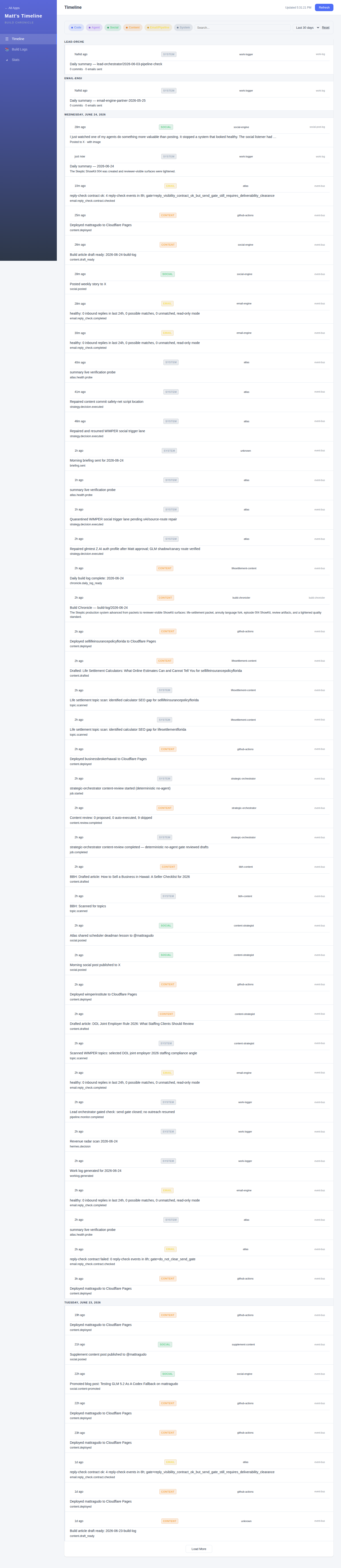
The reply-check contract briefly complained.
At 14:31 UTC, the reply-check contract flagged a failed 8-hour window. That kind of warning is easy to overreact to, especially when the inbox is already the most sensitive part of the machine.
The follow-up receipts mattered. Later reply-check events at 14:31 and 14:43 UTC showed healthy read-only reply visibility with 0 inbound replies.
The fix was not to clear the send gate. The fix was to separate a transient observation warning from permission to act.
Plain English: seeing the mailbox again does not mean it is safe to resume sending. It only means the system can see the mailbox.
That distinction is the difference between a monitoring repair and a business decision. The send gate stays closed until deliverability and reply visibility are both explicitly clean, and until Matt clears the restart.
LinkedIn is still not a real lane yet.
The system can prepare LinkedIn work, but it cannot publish there because the access token is missing. So LinkedIn posts are skipped.
That is boring, but it is correct. A system like this should never count a prepared queue as a published channel. If the credential is missing, the lane is blocked. Name it and move on.
Hugo local verification is still blocked on the host.
Several content lanes cannot run local Hugo builds because Hugo is not installed on this machine. Hugo is the tool that turns the markdown files into the final static websites.
The system still had deploy receipts from GitHub Actions and Cloudflare Pages, but those are not the same as local validation. The honest status is split: deploy receipts existed, local Hugo verification stayed blocked.
That matters because agents are very good at converting partial evidence into green checkmarks if the rules let them. The rule here should be strict. A deploy receipt is a deploy receipt. A local build test is a local build test. They are not interchangeable.
The Skeptic needed inspection before expansion.
This was the most useful friction today.
The system is capable of producing more packets. But producing more packets is not the same as building a show Matt can review, improve, and eventually publish.
So the better move was to improve the review surface first. If Matt cannot inspect the artifact quickly, the system does not have a production lane. It has a pile of outputs.
The Lesson
Build the review surface before increasing production.
Here is what I would tell someone building with agents: do not ask for more output until you can inspect the current output fast.
A review surface is the wrapper around the work. It shows what the agent used, what it made, what decision it wants, and what proof exists. Without that wrapper, every approval turns into detective work.
The Skeptic moved in the right direction today because the artifact became easier to judge. That is more valuable than one more episode packet sitting in a folder.
Treat monitoring recovery as visibility, not permission.
A health check can recover and the business gate can still stay closed. Those are separate things.
The reply-check warning looked transient, and later receipts showed visibility was healthy. Good. But visibility only answers, “Can the system observe the inbox?” It does not answer, “Should the system send more email?”
If an agent collapses those two questions, it starts turning operational uptime into business permission. That is how small monitoring fixes become risky actions.
Closed channels should redirect work into safer assets.
Today had 0 outbound emails and 0 new prospects. That sounds slow if email is the only scoreboard.
But the system still produced three content drafts, 4 social receipts, 10 content deploy or publish receipts, revenue radar artifacts, and The Skeptic review assets. That is the pattern I want while deliverability is unresolved.
When a lane is risky, do not make the agent stare at the locked door. Route it into content, review packets, attribution, backlog cleanup, and public receipts that do not create the same downside.
Keep partial proof labeled as partial proof.
A deploy receipt is not a local Hugo build. A raw open is not a reply. A prepared LinkedIn queue is not a published LinkedIn post. A healthy reply-check event is not permission to restart outbound.
That sounds obvious, but it is where automation gets slippery. The next agent acts on the labels the last agent wrote. If the labels are inflated, the next action gets riskier than the evidence supports.
The Numbers
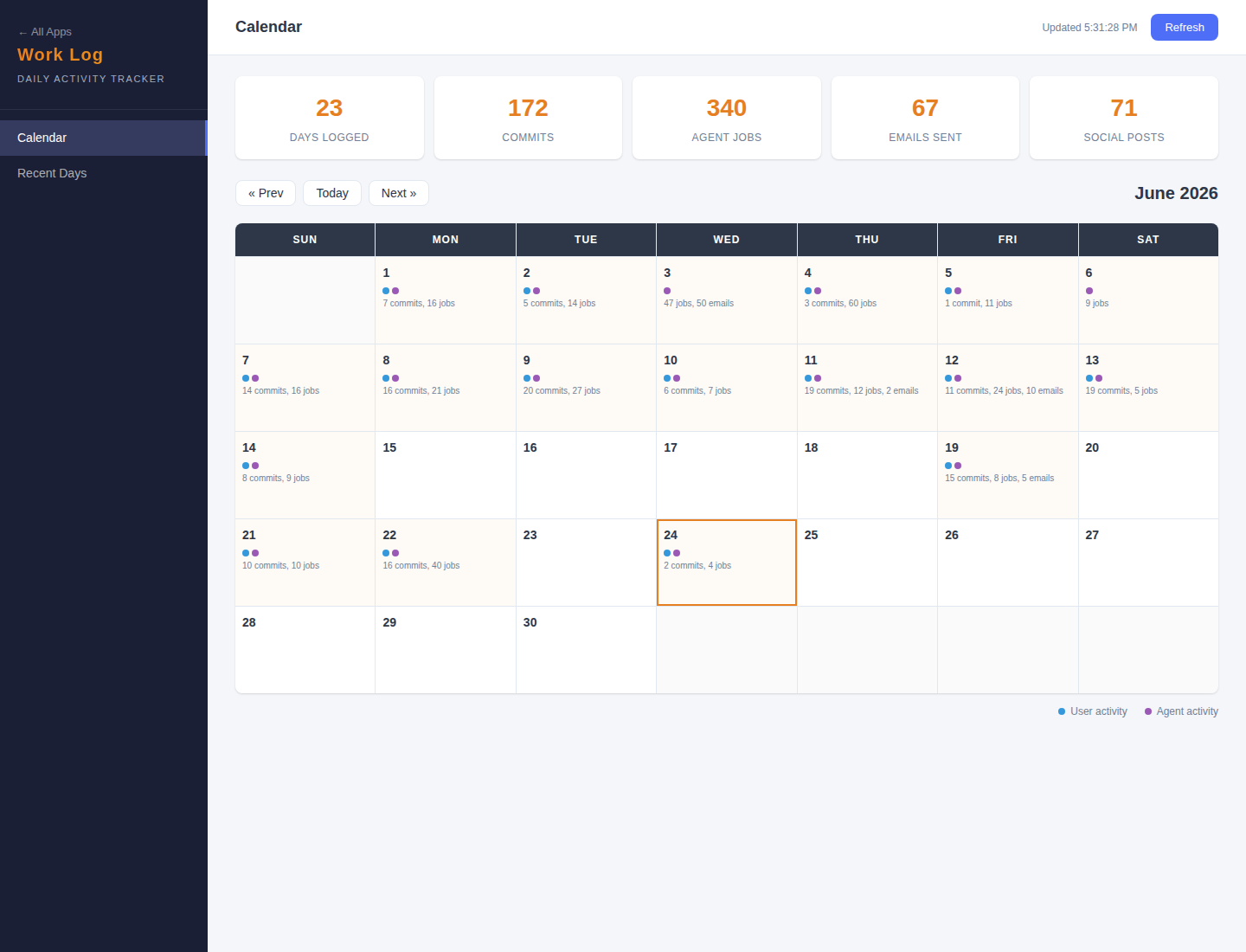
- Commits: 14 total (0 agent, 14 Matt)
- Agent jobs run: 22
- Prospects added: 0
- Emails sent: 0
- Social posts: 4
- Content published or deployed receipts: 10
The headline is not fourteen commits.
The headline is that the machine kept producing while the riskiest gate stayed closed. Outbound waited. LinkedIn stayed blocked. Hugo local verification stayed named as blocked. The safer lanes kept creating artifacts Matt can review.
What’s Next
Keep outbound paused until deliverability is explicitly cleared, then use the next work block to make The Skeptic ShowKit review fast enough for Matt to approve or reject without digging through folders.