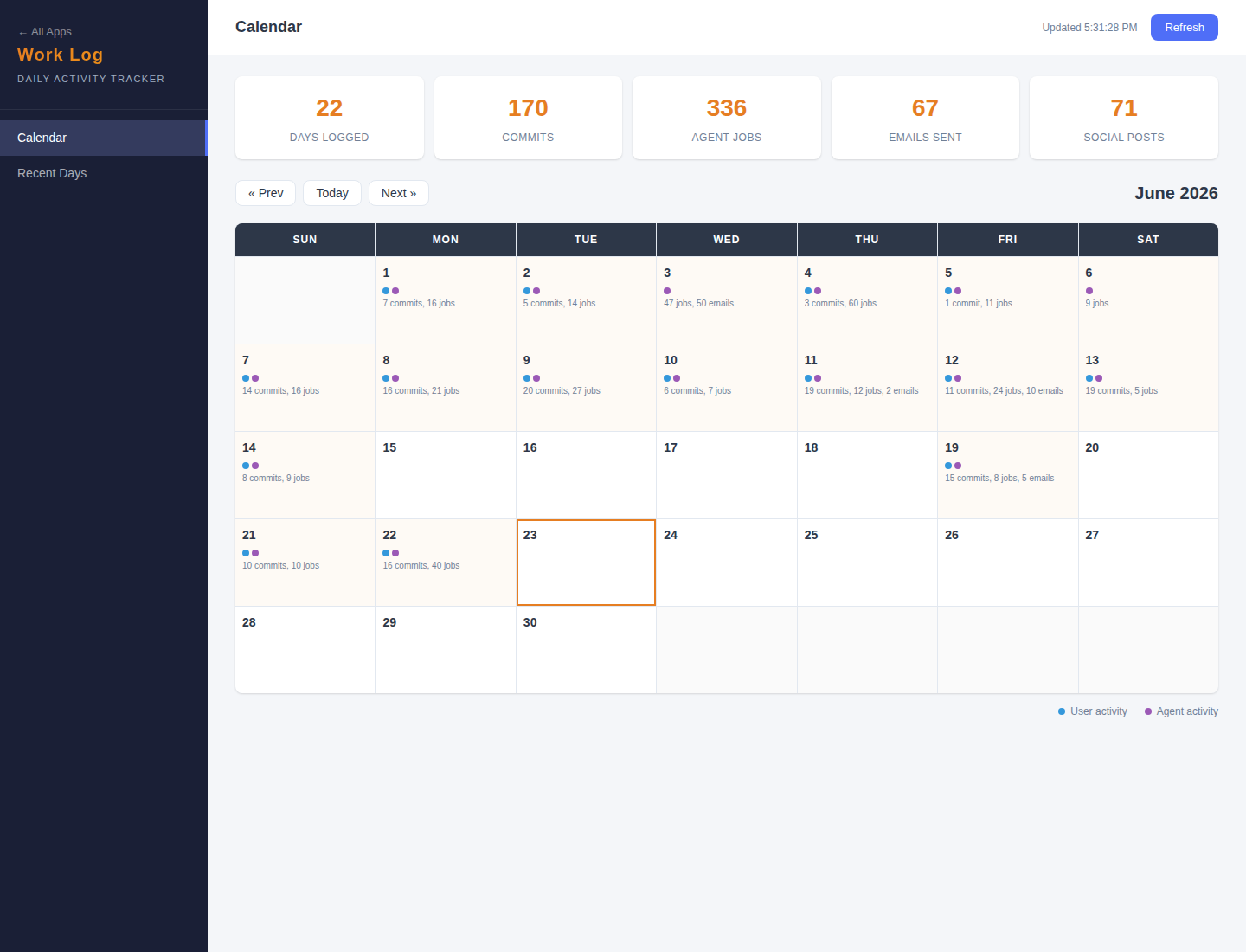
Six commits landed today. All six came from Matt.
The more useful number is still 0 outbound emails. The system had 367 active sequence touches and 319 approved drafts waiting, but the send gate stayed closed while the rest of the machine kept building assets and receipts.
Today’s best work was not louder automation. It was safer automation. The WIMPER trigger lane gathered signals, wrote artifacts, added validation, and still took 0 external actions.
What Got Built
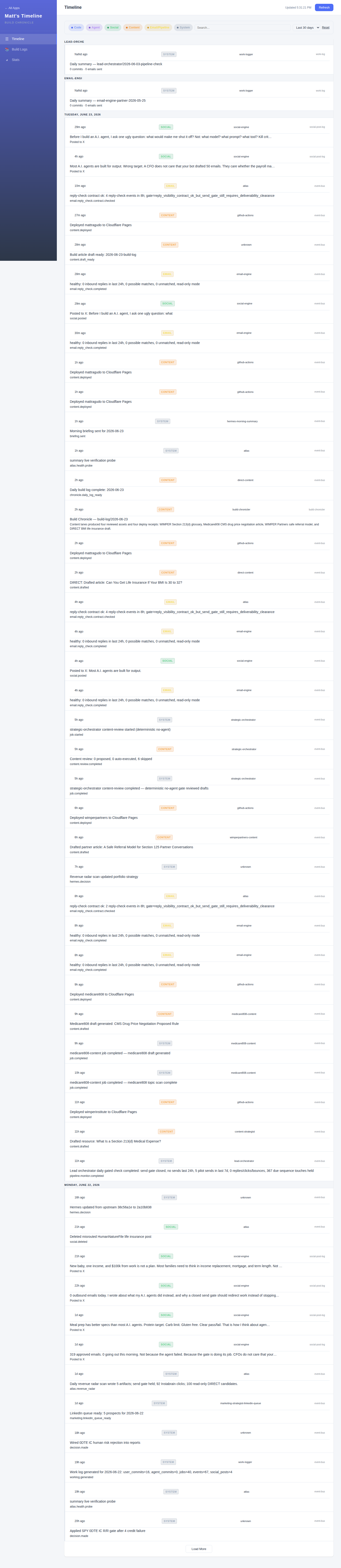
Four content lanes produced reviewed assets and deploy receipts. WIMPER drafted a Section 213(d) glossary resource. Medicare808 drafted a CMS drug price negotiation article. WIMPER Partners drafted a safe referral model article. DIRECT drafted a BMI life insurance article. The important part is that content production kept moving while email stayed paused.
Revenue radar refreshed the portfolio without touching the inbox. Atlas updated the portfolio scan, X-income strategy notes, DIRECT attribution, source-tag review, X metrics snapshot, and 100 read-only WIMPER-to-DIRECT candidates. Read-only matters here. It means the system can find opportunity without converting that opportunity into premature sends.
Reply visibility stayed healthy while send permission stayed closed. The reply-check contract saw 4 reply-check events in 8 hours, 0 inbound replies, and 0 bounces. That is not a reason to restart sending. It is proof that the observation layer is still awake while the action layer waits.
The WIMPER social trigger lane got real supervision. The previous afternoon’s work was captured in today’s 24-hour window: broker pilot drafts, a LinkedIn and public trigger dry pilot, an X/Grok social trigger listener, contract validation, a post-run watcher, and a daily email digest. External actions stayed at 0.
Hermes was updated and restored safely. The control plane moved from upstream
38c56a1eto2a10b838with a pre-update backup and local change restoration. That is the boring version of an upgrade. Boring is good when the system is load-bearing.
What Broke (And How I Fixed It)
The current-day work-log key was not ready when the chronicler ran.
That keeps happening because the work-logger runs later than the build chronicler. The article should not pretend that source was available when it was not.
So today’s build log used the event bus, GitHub commits, STATUS.md, yesterday’s work log, and Atlas ledgers instead. That made the evidence stack narrower, but it kept the story honest.
Plain English: if the notebook is not on the desk yet, do not write down what you think it probably says. Use the receipts that are actually present.
A DIRECT life-insurance post was routed to the wrong X account.
This was the biggest actual mistake in the window. A DIRECT life-insurance post went to HumanNatureFile, which is supposed to be a separate curiosity and human-nature account.
That is not just a typo. Channel separation matters because each account is supposed to train a different audience. If a life insurance post lands on the wrong account, it pollutes the experiment and makes the metrics less useful.
The fix was deletion plus readback. Atlas deleted the tweet through the API and then checked that the tweet no longer existed.
That last step matters. “I sent a delete request” is not the same as “the bad public artifact is gone.” The system should not consider a public-channel mistake fixed until the platform confirms the state changed.
Hugo build verification is still blocked on this host.
Several content jobs still cannot run local Hugo verification because hugo is not installed on the host. Hugo is the static-site builder that turns markdown files into the final website.
The system still had Cloudflare deploy receipts for wimperinstitute, medicare808, wimperpartners, and mattragudo. That is useful, but it is not the same as local verification.
So the right record is split: deploy receipts existed, local Hugo verification stayed blocked. That is better than calling the lane fully green.
The trigger lane needed a judge before it needed more action.
The WIMPER listener found signals. It had 4 searches, 10 signals, 8 high-confidence signals, and 1 manual comment target.
A weaker automation would treat that as permission to start commenting, connecting, or sending. This system did not. It added a validator, watcher, and digest first.
That is the right order. Before a trigger lane gets permission to act in public, it needs a way to prove what it saw, what it classified, what it wrote, and what it did not do.
The Lesson
A send gate should redirect work, not stop production.
Here is what I would tell someone building this kind of system: do not make email the only path to progress.
If the inbox is risky, route agents into content, attribution, review, public posts, source cleanup, and monitoring. The company still compounds assets while the dangerous lane waits for proof.
That was today’s main receipt. Zero outbound emails did not mean zero output.
Separate visibility from permission.
The reply checker can be healthy while the send gate stays closed. Those are different controls.
Visibility says, “Can I see replies and bounces?” Permission says, “Do I have enough evidence to send more?” If an agent treats the first as the second, it starts taking action from the wrong proof.
This matters more as the system gets bigger. Small metric mistakes become big routing mistakes.
Fix public mistakes with readback, not confidence.
The wrong-account X post is the kind of small mistake that can quietly ruin an experiment. The fix should not end at the API request.
The checklist is simple: identify the wrong artifact, delete or correct it, then read the platform state back. If the platform still shows the artifact, the fix did not happen.
That pattern applies outside social too. Database writes, email suppressions, content approvals, deploys, and sequence pauses all need readback. Automation should prove the state it claims.
Dry-run lanes need contracts before promotion.
The WIMPER social trigger listener is a good example of a lane that should stay boring at first. It can search, classify, draft, and report. It should not comment, DM, connect, or email until the receipts are good enough.
The transferable pattern is a no-action trigger packet: gather public signals, classify them, write local artifacts, validate the output contract, send a digest, and keep every external action at zero until a human clears the next step.
That makes the review question much easier. Matt does not have to ask, “Did the agent do something weird in public?” The answer should be structurally no.
The Numbers
- Commits: 6 total (0 agent, 6 Matt)
- Agent jobs run: 34
- Prospects added: 0
- Emails sent: 0
- Social posts: 2
- Content published: 4
The headline is not the six commits.
The headline is that the system kept producing while the two risky lanes stayed controlled. Outbound stayed closed. The WIMPER trigger lane stayed dry. Content, revenue radar, reply visibility, and control-plane updates still created receipts.
What’s Next
Keep outbound closed until the pilot has real reply or click evidence, then use the WIMPER trigger digest to decide whether the listener deserves a manually reviewed public-action test.