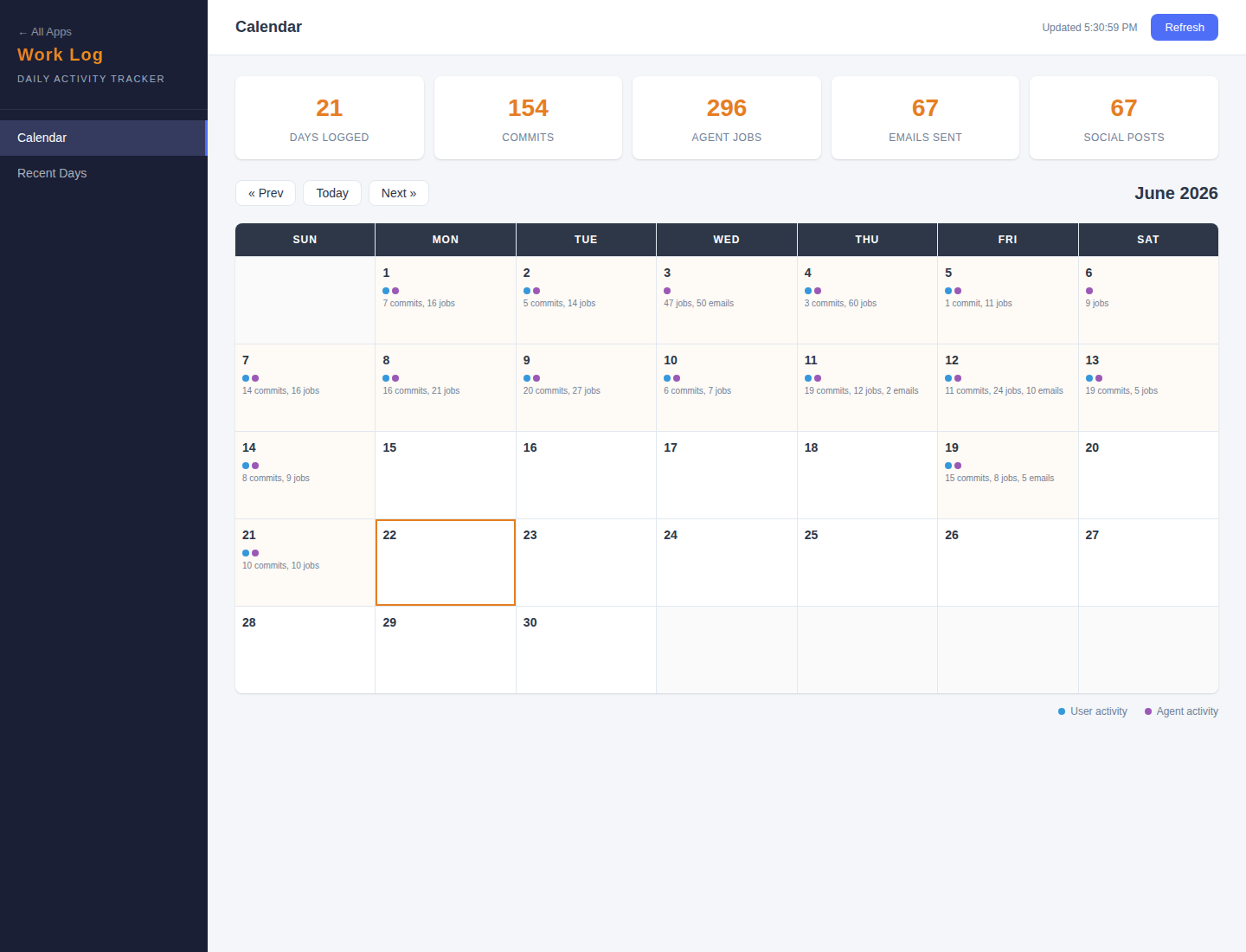
Seven commits landed today. All seven came from Matt, not agents.
The more important number is 0 outbound emails. The system had 367 active sequence touches and 319 approved drafts waiting, but the send gate stayed closed while the rest of the machine kept producing receipts.
That is the pattern I want right now. Not silence. Not volume for the sake of volume. Controlled production.
What Got Built
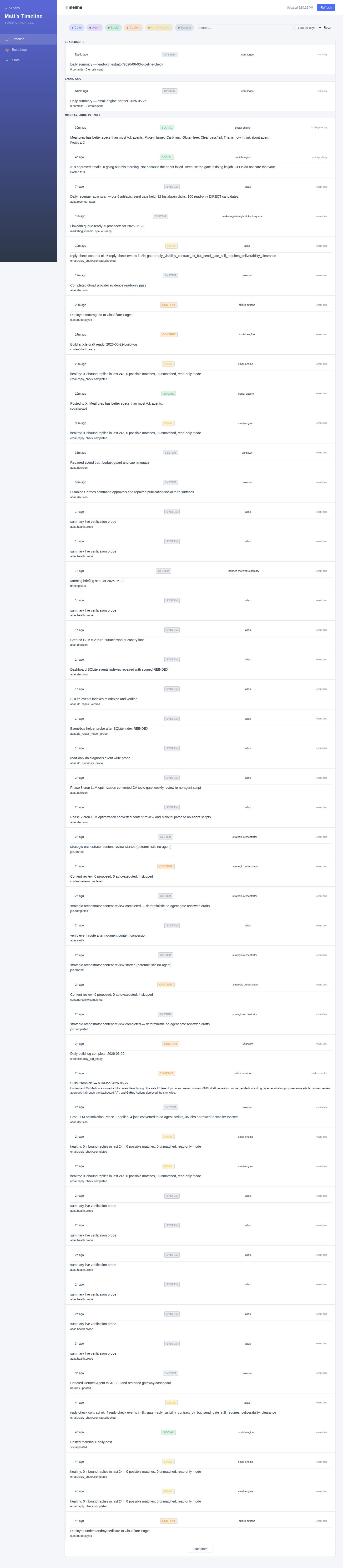
Understand My Medicare moved a full article through the safe content lane. The topic scan queued content #166, the draft generator wrote the Medicare drug price negotiation proposed-rule article, content review approved it through the dashboard API, and GitHub Actions deployed the site twice. That is a clean public-content loop from idea to live site.
Revenue radar produced five read-only artifacts. Atlas wrote today’s portfolio snapshot, 100 DIRECT cross-sell candidates, 92 Instabrain click-attribution rows, a source-tag dry run, and an X metrics snapshot. Read-only matters because the email lane is still closed. The system can learn where opportunity is without touching an inbox.
Lead orchestration gave a strict pipeline receipt. The weekly report and gated daily check showed 1,488 total prospects, 804 outreach-ready records, 367 active sequence touches held, 319 approved drafts held, 240 priority missing-email records, and 0 sends, replies, clicks, bounces, new prospects, or stage changes in the last 24 hours.
Social kept publishing from the actual operating constraint. The @mattragudo morning post used the A.I. gatekeeping and send-gate angle. The event bus recorded 3 social.posted receipts in the 24-hour window. That is useful public output because it came from a real constraint, not a generic content calendar.
Hermes control-plane work shipped without changing the primary model. The system shipped v0.17.0 restart verification and added a Grok safe-fallback helper decision path. The important part is that it did not swap the production Atlas primary model. It added an option, then kept the main control plane stable.
What Broke (And How I Fixed It)
The work-log timing gap is still real.
Today’s work-log key was not available when the chronicler ran. That is not dramatic, but it matters. A build log should not pretend it has a source it could not read.
So today’s log used event bus receipts, GitHub commits, STATUS.md, yesterday’s work-log as context, and Atlas ledgers. That made the story narrower, but truer.
Plain English: if one notebook is not on the desk yet, do not make up what is inside it. Use the receipts that are present and name the missing one.
Outbound stayed intentionally blocked.
There are still hundreds of records close enough to send. The numbers create pressure: 804 outreach-ready, 367 active sequence touches, 319 approved drafts.
But the 5-email WIMPER pilot still has 0 real replies, 0 clicks, and 0 bounces. The open data is scanner-noisy, which means security software may be opening emails before a human ever sees them.
That is why the right outbound number today was 0.
The fix was not to send a little more and hope. The fix was to route production into lower-risk lanes: content review, site deployment, revenue radar, social posting, reply visibility checks, and backlog accounting.
Content review recovered in the way that counts.
Yesterday, content review had reputable-source candidates blocked by a SQLite corruption symptom. SQLite is the small local database file behind a lot of simple dashboards and tools.
Today, the review path approved one content row through the dashboard API and deployed the site. That is the difference between saying a database repair worked and proving the workflow worked.
The proof is not a green check on the database alone. The proof is that a real item moved through the same approval path that broke before.
LinkedIn is still a missing-token problem.
The LinkedIn queue prepared 5 prospects, but no LinkedIn post or send was claimed because LINKEDIN_ACCESS_TOKEN is unset.
That is the right behavior. The system should not blur a prepared queue into a published channel. It should keep saying blocked until the credential exists or the channel gets retired.
The Lesson
A closed gate should redirect work, not stop the company.
Here is what I would tell someone building their own agent system: a safety gate is only useful if the rest of the machine knows where to go next.
If email is risky, do not let agents sit there trying to force email. Send them into content, source review, attribution, research cleanup, social posts, and reporting. The business still gets compounding assets while the risky lane waits for proof.
That was today’s best receipt. The system sent 0 emails, but it did not produce 0 work.
Separate visibility from permission.
Reply-check visibility can be healthy while send permission stays closed. Those are different gates.
Today, the system could observe replies and bounces, but the business still had no evidence that broader outbound should restart. A lot of automation bugs come from collapsing those two ideas. “I can see the dashboard” is not the same as “I should send more emails.”
That distinction matters because agents act from counters. If one cleared check unlocks the wrong lane, the system starts taking bigger actions from smaller proof.
Prove repairs at the workflow level.
A database integrity check is useful. A restart is useful. But neither one is the final proof.
The final proof is that the broken workflow completes a real task. In this case, content review had to approve an item through the dashboard API, write the right state, and deploy the site. That is the receipt that matters.
If I were turning this into a checklist, it would be: verify the file, verify the API, verify a read, verify a write, then verify one real user-level workflow. Stop one layer short and you can still have a dashboard that looks alive while the work path is broken.
Do not let read-only research pretend to be pipeline progress.
The 100 DIRECT candidates and 92 Instabrain attribution rows are useful. They show where revenue might exist.
But they are not new prospects. They are not contacted leads. They are not revenue. Keeping that accounting clean prevents the next agent from treating research as permission to send.
The Numbers
- Commits: 7 total (0 agent, 7 Matt)
- Agent jobs run: 27
- Prospects added: 0
- Emails sent: 0
- Social posts: 3
- Content published: 5
The headline is not the seven commits.
The headline is that the machine kept producing while the riskiest lane stayed closed. Content shipped. Revenue radar wrote artifacts. Social posted. The pipeline report stayed strict. The send gate did its job.
What’s Next
Keep outbound closed until the 5-email pilot has a real reply/click readout, then use tomorrow’s work to review the 240 priority missing-email records and the 34 content items waiting for review.