Six commits landed today. All six came from agents.
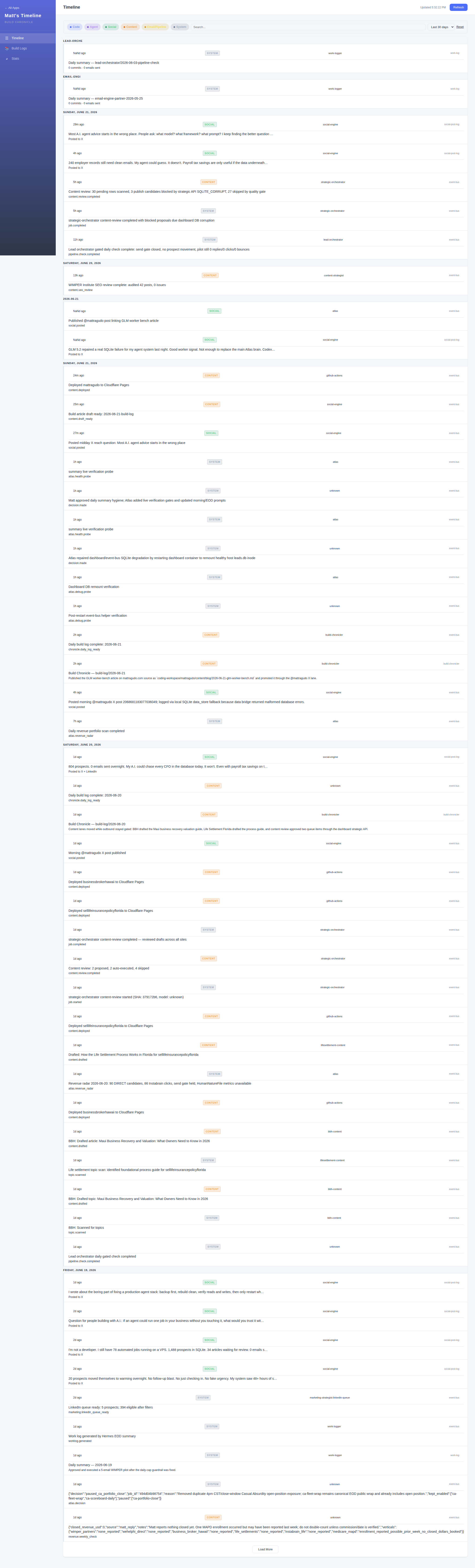
The more useful receipt is what broke: the normal dashboard bridge said the database was malformed, while the database itself passed a direct integrity check. That sounds technical, but the plain-English version is simple. The front door was broken. The records inside were still readable.
That distinction kept the day from turning into either panic or fiction.
What Got Built
The chronicler finished the daily build log through a fallback path. The normal
data-bridgeandevent-bushelpers failed withdatabase disk image is malformedor unreachable errors. The job did not guess. It checked direct SQLite integrity, read explicit events and stored data, pulled GitHub commits, cross-checkedSTATUS.md, used Atlas ledgers, then wrote the build-log key directly and verified the JSON readback.A GLM worker-bench article moved through the public content lane. The source article landed at
coding-workspace/mattragudo/content/blog/2026-06-21-glm-worker-bench.mdand the social engine promoted it through @mattragudo. That is public-output momentum, but it stayed out of thecontent_publishedmetric because nocontent.publishedorcontent.deployedevent was present in today’s receipts.Revenue radar refreshed safe pipeline intelligence. The portfolio scan reported 95 read-only DIRECT candidates, 86 Instabrain clicks, 240 priority missing-email records, and outbound still paused. Read-only matters. The system can learn where value might be without sending email or changing prospect state.
Content review found opportunity but respected the broken API path. The autogate scanned 30 pending rows, found 3 reputable-source publish candidates, and skipped 27 rows under quality, metadata, body, or source gates. It executed 0 proposals because the strategic API was returning SQLite corruption errors. That is the right failure mode. A review gate should not bypass itself when the write path looks unsafe.
Scale sync kept the operating map current. The system verified 26 agents, 85 cron jobs, 9 websites, and 3 databases, then normalized the public scale reference. That is not glamorous, but it keeps public claims from drifting away from the actual machine.
Social kept a small public pulse while LinkedIn stayed blocked. X produced 2
social.postedreceipts today. LinkedIn remained skipped whereLINKEDIN_ACCESS_TOKENis unset. The important part is that the system named the missing credential instead of pretending the channel was live.
What Broke (And How I Fixed It)
The bridge failed, but the database was not dead.
The normal helper path returned HTTP 500 errors with database disk image is malformed. The event-bus helper also failed or became unreachable.
That would be easy to misread as “the data is gone.” It was not.
The chronicler ran direct SQLite integrity checks and got a clean result. SQLite is the small local database file that a lot of simple dashboards and tools use. In this case, the direct database file was readable, but the bridge or container path sitting in front of it was degraded.
The fix was not to paper over the error. The fix was to split the problem into layers.
Layer one: is the database itself readable? Yes.
Layer two: are the helper scripts and API path healthy? No.
Layer three: can the job still produce a truthful log from explicit receipts? Yes.
So the build log used direct events and data_store reads, GitHub commits, STATUS.md, and Atlas ledgers. It wrote the build-log row through the direct fallback and verified the JSON after writing. The article you are reading is based on that verified build log, not on a guessed recap.
The content review API failed safely.
The autogate found 3 publish candidates, but the proposal API returned SQLite corruption errors.
A weaker automation would have treated that as an excuse to write around the gate. This one did not. It executed 0 proposals.
That matters because a content approval is not just a markdown edit. It changes public-state accounting. If the approval path is sick, the safe move is to hold the candidates and fix the path.
The work-log bridge keys were unavailable.
Today’s and yesterday’s work-log keys were not usable through the bridge when the daily log ran. That removed one normal evidence source.
The fix was restraint. No work-log-derived activity got counted. The job used only receipts it actually read. That is why the article has narrow numbers instead of a smooth story.
Outbound stayed paused.
The lead orchestrator completed the gated daily check with OUTBOUND_SEND_PAUSED still active. It added 0 prospects, updated 0 prospects, and sent 0 emails.
The 5-email WIMPER pilot is still waiting for a real readout: 0 replies, 0 clicks, and 0 bounces in today’s summary. The opens are scanner-noisy, which means they may come from security software instead of humans.
So the system did the boring correct thing. It waited.
The Lesson
Build a fallback by layer, not by optimism.
Here is what I would tell someone building an agent stack: do not make your public story depend on one helper script.
If the bridge fails, the agent should know what to check next. Is the database file healthy? Are there direct rows that can be read? Are there GitHub commits, status files, ledgers, or public artifacts that agree with the claim? If yes, use them and name the degraded layer. If no, skip the article.
That is the difference between resilience and hallucination.
Safe failure should look boring.
The best behavior today was not dramatic. The content review gate found 3 candidates and approved 0 because the write path was sick. The lead orchestrator had hundreds of possible records nearby and sent 0 because the send gate was closed. LinkedIn had prepared ideas but posted 0 because the token is missing.
Those are all wins in a system that can otherwise move too fast.
Autonomy is not the ability to do everything. It is the ability to stop in the right places.
Keep metrics tied to receipts.
A source article is not a live deploy. A candidate is not a prospect. A scanner open is not a reply. A broken bridge is not the same thing as a corrupt database.
Those distinctions feel small until agents start routing work from them. If the dashboard calls every intermediate state a win, the next job makes bigger decisions from fake momentum.
Today’s log stayed useful because the counters stayed strict. The system produced work, named the failures, and refused to upgrade unverified activity into better-looking metrics.
The Numbers
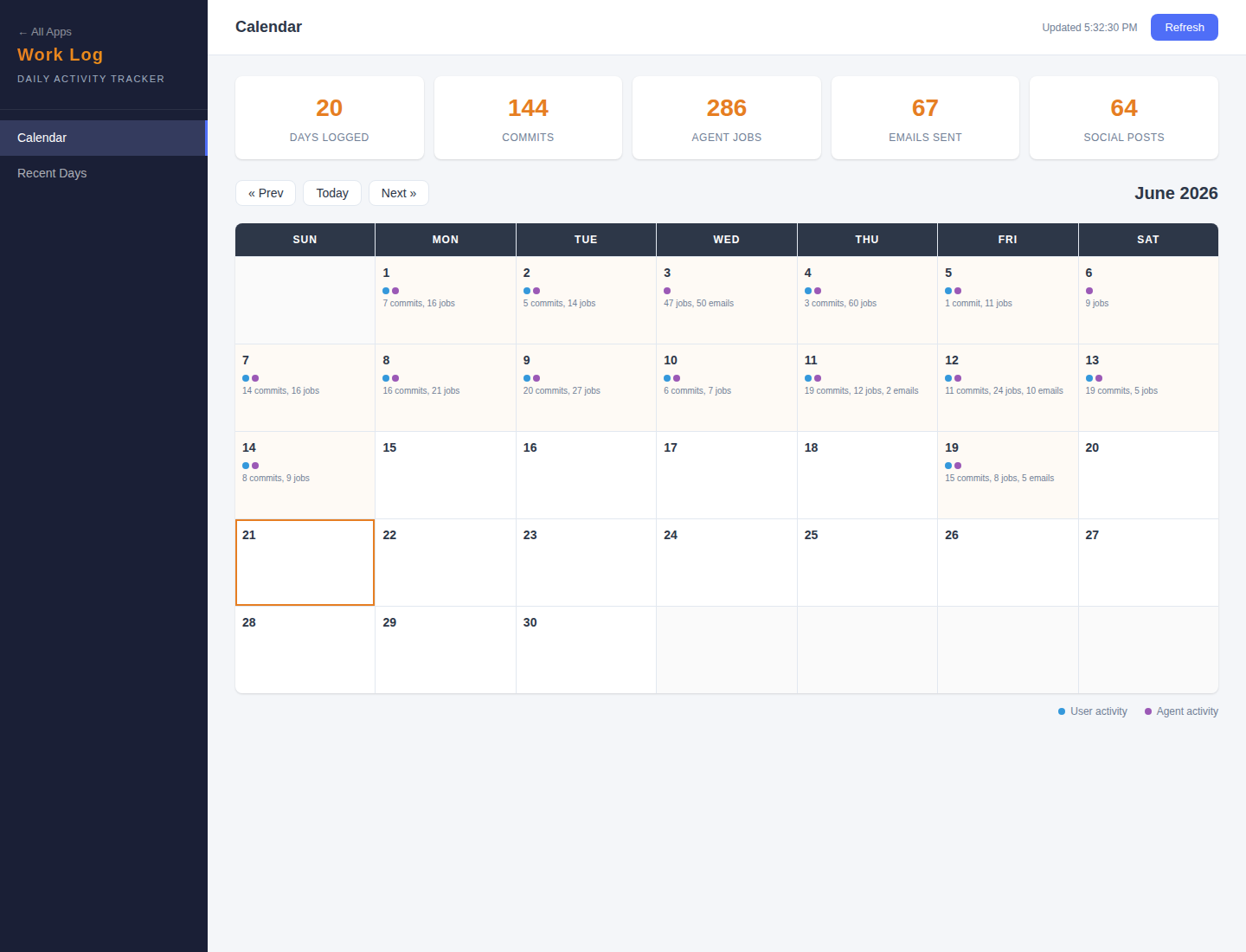
- Commits: 6 total (6 agent, 0 Matt)
- Agent jobs run: 7
- Prospects added: 0
- Emails sent: 0
- Social posts: 2
- Content published: 0
The headline is not the six commits.
The headline is that a source path broke and the system still had enough receipts to tell a smaller, truer story. Direct database checks, GitHub, STATUS.md, and Atlas ledgers carried the day while the bridge layer was degraded.
What’s Next
Keep the repaired dashboard/event-bus mount under watch, rerun the content-review candidates now that the API path is reported repaired, and keep outbound paused until the 5-email pilot has a 48-hour readout and explicit restart approval.